Wednesday, 29 December 2021

Understanding ITSM

ITSM, ITSM Exam Prep, ITSM Career, ITSM Preparation, ITSM Certification, ITSM Learning, ITSM Cert Prep, ITSM Guides

IT Service  Management (ITSM) :

As technology part is becoming integral to most of business, companies are looking forward to the incorporate IT to fulfill all the required needs of the companies. ITSM stands for IT Service Management which consists of policies, processes and procedures for managing, implementing, improving and support the IT services. The IT service includes hardware, software or computing resources the organization supplies for an user but Its consistent focus stays on improving IT customer services in alignment with business goals.

ITSM is becoming the key enabler of transformation and modernization efforts with certain companies who push automatic user-centric processes to improve all over productivity, it is a disciplined complicated system with certain intended goals . whereas, ITSM automation very cost efficient. This article is a wholesome potion of the topic and will provides all basic knowledge to the reader.

Why businesses need ITSM ?

There are a number of reasons for which ITSM is required for a business.

Let’s know some of them.

◉ ITSM makes IT teams work process easy by providing fast, agile, tension free response from the unexpected events, new offers and competitive threats.

◉ Reducing IT wastage and cutting costs.

◉ Improved agility for new IT services.

◉ Automatic cloud processes create an end user portal where user will be provided auto provision resources within a private or public cloud .

◉ Improves the customers experience and satisfaction.

◉ Streamlines employee onboarding.

◉ Improved request coordination for more efficient service.

◉ Betterment in pushing out faster and more consistent updates.

◉ Quick respond to major issues/changes.

◉ Faster change in management processes.

◉ Improved quality of services.

New technologies like Machine Learning, Cloud Computing and Internet of Thing (IoT) are implementing, deploying these technologies in an ITSM can change business game, here are some skills needed for the ITSM are automation, artificial intelligence and analytics, business management, communication, change management, leanings and agility, customer services, interpersonal skills, innovation. ITSM software suites contain everything which is business related which work under frameworks of their choice and offer flexibility for all over development.

Framework :

ITSM, ITSM Exam Prep, ITSM Career, ITSM Preparation, ITSM Certification, ITSM Learning, ITSM Cert Prep, ITSM Guides
ITSM frameworks are targeted at specific industries or businesses needs like telecommuting, government system, healthcare etc. These are some most used frameworks.

◉ IT infrastructure library 4 (ITIL 4)

◉ Business process framework(eTOM)

◉ Control objectives for information and related technologies(COBIT)

◉ FitSM

◉ Microsoft operation framework (MOF)

◉ The open group architecture framework (TOGAF)

Keep it in mind before implementing ITSM processes :

Ina organization if we will see IT team is like a service provider not just like another department. Because IT support teams are continuously working to provide a good working environment. There are 3 major things that each business has to keep it in mind before implementing ITSM processes i.e.

1. The maturity of the team

2. Problem Statement

3. Framework to be adopted

Finally, ITSM has a power to change the business culture as well as relationship between IT and business. It always focus to what the business want and ITSM introduces that technology/tools/services to achieve the business goal. So main moto of ITSM is delivering value to customers.

Source: geeksforgeeks.com

Monday, 27 December 2021

Difference between Project Management and Warehouse Management

Project Management, Warehouse Management, Project Management Exam, Project Management Exam Prep, Project Management Career, Project Management Tutorial and Materials

1. Project Management :

Project management, as name suggest, is simply management that focuses on successful completion of project and produces a specific output or product on given period of time.

2. Warehouse Management :

Warehouse management, as name suggests, is simply management that focuses and control operations of warehouse such as receiving, picking, shipping, storing, etc. of inventories of business.

Project Management, Warehouse Management, Project Management Exam, Project Management Exam Prep, Project Management Career, Project Management Tutorial and Materials

Difference between Project Management and Warehouse Management :

Project Management Warehouse Management
It mainly focuses on management of individual project till it gets completed successfully.  It mainly focuses on management and storage of inventories, material sourcing in large amount.
It is a temporary management process.  It is a permanent management process i.e. an ongoing process. 
Project manager have more responsibilities than service manager.  Warehouse manager have less responsibilities than project manager. 
Factors affecting project management includes improper risk management, timing issues, improper communication among team members, structural complexity, etc.  Factors affecting warehouse management includes lack of space, excess stock, low traceability and connectivity, improper time management, etc. 
Process of this management includes plan, manage, execute, monitor and control and then finally closing project.  Process of this management includes receiving goods, assigning location in warehouse, storing goods, picking goods, and finally shipping. 
Its benefits include improve team collaboration, improve team effectiveness, minimizes confusion regarding role, keeps team aligned and focused, etc.  Its benefits include increased profitability, boost speed of picking, receiving and order processing, decreases inventory costs. 
Its main objective is to organize and control activities so that project is completed successfully as soon as possible inspire of all risks.  Its main objectives is reduce overall operation cost as much as possible and increase profit and main accuracy of inventories. 
Type of project management includes Kanban project management, waterfall project management, PRINCE2 project management, etc.  Types of warehouse management includes cloud-based management system, standalone management system, supply chain execution module, etc. 
Project management is more difficult than service management.  Warehouse management is less difficult than project management. 

Source: geeksforgeeks.org

Friday, 24 December 2021

Difference between Project Management and Financial Management

Project Management, Financial Management, Project Management Exam Prep, Project Management Certification, Project Management Career, Project Management Skills, Project Management Jobs

1. Project Management :

Project management, as name suggest, is simply management that is employed in project to maintain its activities from project initiation till its termination and meet organizational goal.

2. Financial Management :

Financial Management, as name suggests, is simply management that focuses on management of financial operations and resources that in turn increase profit and achieve objective of organization as soon as possible in satisfactory manner.

Difference between Project Management and Financial Management :

Project Management Financial Management 
It mainly focuses on management of project planning and its completion.  It mainly focuses on management of financial operations of organization.
It is a temporary management process i.e. one time activity.  It is a permanent management process i.e. an ongoing process. 
Project manager have more responsibilities than financial manager.  Financial manager have less responsibilities than project manager. 
Factors affecting project management includes project manager, organizational culture, no expertise, no clear objective or goal, etc.  Factors affecting financial management includes savings and investments, financial goals, provision of emergencies, financial potential, etc. 
Process of this management includes project initiation, project planning, project execution, checking performance controlling activities, and at last terminating project.  Process of this management includes planning, organizing, controlling, and monitoring financial resources to achieve goal and objective of organization. 
Its benefits include increase customer satisfaction, reduce risk of failure, improve performance, maintain time and budget, etc.  Its benefits include cost control and profit planning, cash flow management, tactical planning and cost management, preparation and execution of budget, etc. 
Its main objective is to lead working team to achieve goals and fulfill requirements of customer.  Its main objectives is to maintain financial department i.e. maintain cash flow of organization or company. 
Type of project management includes PRINCE2 project management, Kanban project management, Six sigma project management, etc.  Types of Financial Management include Treasury and capital budget management, working capital management, insurance and risk management, etc. 
Project management is more difficult than financial management.  Financial Management is less difficult than project management. 

Source: geeksforgeeks.org

Thursday, 23 December 2021

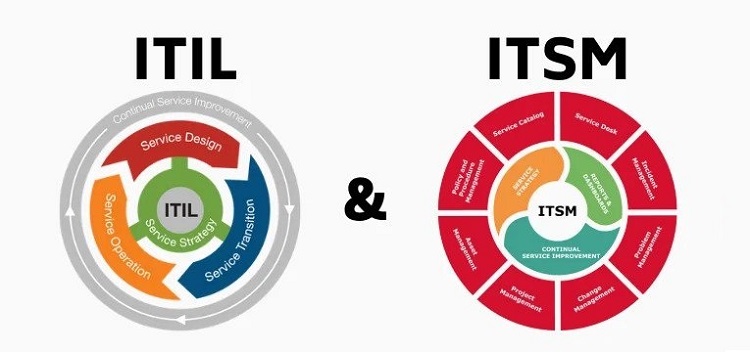
Difference between ITSM and ITIL

ITSM Exam Prep, ITIL Exam Prep, ITIL Certification, ITIL Learning, ITSM Certification, ITSM Career, ITIL Learning

1. ITSM

It is an actual practice or you can call it a professional discipline of managing different kinds of IT operations. The ITSM stand for IT Service Management which means the implementation and management quality of it service that match the need of business. It is true that information technology would play an important role in human business. Computer, telephone, Network and printers like device control are responsibility of IT department. Now ITMS is not just for the IT organization it also the hot spot for enterprise performance. ITSM software is no longer short term process. 

ITSM software tools are calm with some components such as

1. Database

2. Business objects

3. Process engine

ITSM is used to create plan and manage change in the system for profit in business. It’s manages the IT budget so that bill can be easily pay end to buy new tools when it required and as well as in investment.

Benefits:

1. Improve efficiency which helps the organization to maximize their resources.

2. It’s reduced operational post it’s help the organization to scale there operations more easily.

3. It’s also the remove risk from damaging business and ensuring IT organization can implement new changes in IT involvement.

4. ITMS improve visibility into operations and performance.

5. It give a boost to self service productivity in organization.

6. The best part of this is it’s gives a better service and customer experience

7. It saves the business time and money and reduce unnecessary workload.

2. ITIL

It is a basic cover guidance of ITSM but its provided the best practice. ITIL is considered as the registered trademark of AXELOX. ITIL refers to Information Technology Infrastructure Library which is a framework design to plan, deliver, select, maintain overall life cycle of IT service in an organization. ITIL v2 used to applicable and uniform structure on service support and deliver and include the original process for business to follow where as ITIL v3 will help the business to improve their service as well as guideline on every service strategy.

Benefits:

1. Stronger a judgement in between IT and the business.

2. It’s improved service delivery as well as customer satisfaction.

3. ITIL reduce costs throw improve use of resources.

4. Provide a stable service Environment support constant business change.

5. It’s also helpful in better management in business risks and service failure.

6. It easily solved issue by inscribing the root causes.

Difference between ITSM and ITIL :

ITSM ITIL 
It refers to IT Service Management.  It refers to Information Technology Infrastructure Library.
It’s used in plant all the business changes and manage those to keep the business profitable.   It is used in calibration of IT related business and issue service to the customer. 
This service management tells how you manage the services that your organization delivers to it’s customers or clients.  This infrastructure library tells one of many items in the tool box which you can implement to do it very well and achieve better service management. 
It’s used to plan the budget for saving and investment in future.  It’s used to make delivery of IT service. 
ITSM used by the IT management team for manage the delivery service in a suitable way. It has some other frameworks like six sigma, DevOps, COBIT, etc.  ITIL is a best practice for ITSM framework. Means the best practices of ITSM are provided by ITIL. 
ITSM always plans for the changes that needs to be implemented and managed in the business to gain the profit.  ITIL always focuses aligning IT to the respective business in an aim of providing better service to the customer. 
It is a professional discipline for managing different IT operations.  It is like a guiding framework for implementing ITSM. 

Source: geeksforgeeks.org

Wednesday, 22 December 2021

Lean Six Sigma Explained

Lean Six Sigma, Six Sigma Exam Prep, Six Sigma Exam Preparation, Six Sigma Learning, Six Sigma Career, Six Sigma Guides, Six Sigma DMAIC, Define, Measure, Analyse, Improve, Control

If you are looking to improve the way you carry out processes in your business and change the way things work, Lean Six Sigma may be an ideal option.

Nearly forty years old, this methodology has helped thousands of organizations around the world speed up production, improve efficiency and help save money.

You may be wondering if it is right for your business and if so, how to go about becoming a qualified practitioner. If the answer to both of these questions is yes, we’ve put together this short guide to help you find out more about Lean Six Sigma.

The history of Lean Six Sigma

Lean Six Sigma was initially devised by Motorola in 1985. The methodology came into being as a way for the company to reduce manufacturing issues and increase efficiency.

In fact, ‘sigma’ is a measurement of variation. With Lean Six Sigma, you want to reduce the number of variations (or defects) in your processes, as well as eliminate any unnecessary steps. Sigma strives to achieve near-perfect output, high-quality and consistent improvement.

This methodology was initially used by companies in the manufacturing industry. However, Lean Six Sigma has now been adopted by a wide range of different sectors including IT, healthcare, marketing and banking.

If your business has processes in place, then the Lean Six Sigma methodology can be applied.

What is Lean Six Sigma all about?

Lean Six Sigma is about data gathering, looking at issues analytically and measuring data to see if the processes put in place are working.

It’s also about continuous improvement. Once a problem has been resolved, it still needs to be monitored to see if there is a better, more efficient way of carrying it out.

Lean Six Sigma requires buy-in and commitment from everyone in the organisation, from the Managing Director to those on the shop floor. Everyone across the company needs to be aware of what is being done and how even the smallest changes can have a significant impact.

A good project manager skilled in the Lean Six Sigma Methodology will rally people behind any changes that need to be made.

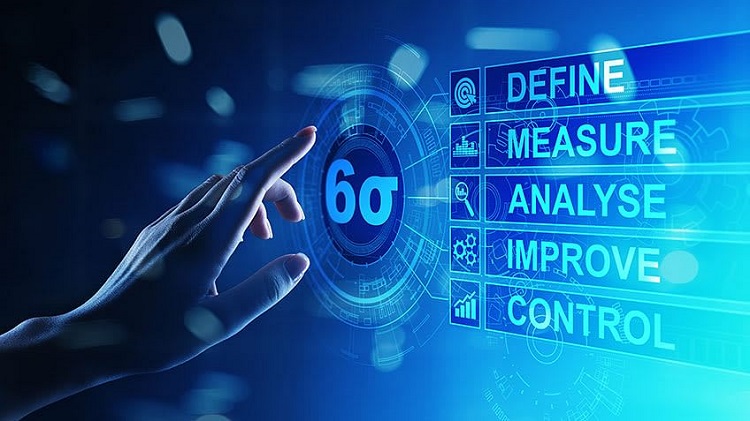
What is DMAIC?

DMAIC is one of the critical methodologies that Lean Six Sigma uses. It is utilised to find and eliminate defects in a process.

DMAIC stands for:

◉ Define – define the problem, as well as what and who is needed to solve it

◉ Measure – quantify the problem and establish a baseline so you can see how things are improving

◉ Analyse – identify what is causing the problem and how you can change or remove these issues

◉ Improve – solve the problem, implement the changes and check that any amends made are working

◉ Control – ensure that the problem does not return, and that the process continues to improve over time

The belts of Lean Six Sigma

Six Sigma has a lot in common with karate. Both require precision, dedication and knowledge.

With karate, you receive a new colour belt when you pass your exams. With Lean Six Sigma, although you do not receive a physical belt, the different grades are called ‘belts’!

People with no formal Lean Six Sigma qualifications are known as ‘white belts’. After this, there are three different levels of accreditation.

Lean Six Sigma Yellow Belt

This is a short introduction to the world of Lean Six Sigma – ideal for those who may not be managing change but are involved in supporting the people that are.

Learn more about our Lean Six Sigma Yellow Belt

Lean Six Sigma Green Belt

The next step on the Lean Six Sigma ladder, a Green Belt, is a good starting point for project managers. This course introduces them to the problem-solving frameworks that Lean Six Sigma utilises.

This is a lifetime certification and does not need to be recertified.

Learn more about our Lean Six Sigma Green Belt

Lean Six Sigma Black Belt

In karate, a black belt means that you have mastered all there is to know and are ready to lead others. The same applies to a Black Belt in Lean Six Sigma.

This advanced course teaches delegates how to drive change across the business as well as how to measure performance.

This certification needs to be renewed every three years.

You don’t have to complete Lean Six Sigma Green belt before you take on this accreditation, but it is recommended.

If you want to take things even further, you can study for a Lean Six Sigma Master Black Belt. This shows that you can not only lead others but are qualified to teach them in Lean Six Sigma methodology too.

Learn more about our Lean Six Sigma Black Belt

Why is Lean Six Sigma so beneficial?

Lean Six Sigma has the following benefits for organisations.

◉ It improves productivity

◉ It improves quality

◉ It increases customer and stakeholder satisfaction

◉ It ensures compliance with government regulations

◉ It reduces waste

◉ It reduces operating costs

◉ It reduces risk

◉ It reduces employee turnover

It also has benefits for you too! Holding a Lean Six Sigma Qualification can increase your salary and help you get promoted to managerial roles.

Source: itonlinelearning.com

Tuesday, 21 December 2021

Top 7 Proven Benefits of Why You Need an OMG-OCUP2-ADV300 Certification

OMG-OCUP2-ADV300, OMG-OCUP2-ADV300 Exam, OMG-OCUP2-ADV300 Certification, OMG-OCUP2-ADV300 Practice Tests, OMG OCUP 2 Advanced, OCUP 2 Advanced

OMG's worldwide UML Certification Program delivers an objective measure of your UML 2.5 Specification knowledge-and means to the rest of the IT community that you have serious credentials. OCUP 2 OMG-OCUP2-ADV300 Certification will benefit you by giving you vital documentation to present to employers and clients. It also helps companies looking for skilled UML practitioners like you by giving them a foundation for hiring and promotion decisions.

The UML Certification Program suggests three levels of certification: OMG-Certified UML Professional 2 Foundation, Intermediate and Advanced. Each group has its examination, progressively testing more complex concepts and the UML 2.5 Specification usage.

Have You Ever Thought About Spending Time Making An OMG-OCUP2-ADV300 Certification?

Suppose this is something that has crossed your mind, good! You are on the right track. You can opt to take a course in your desired field or grow your horizons and take a course in a new skill. Getting a new certification or qualified talent has many pros and almost no cons or drawbacks.

Investing your time, money, effort, and energy in making professional certifications can only aid you. It will never hurt you or your competitors. There are countless advantages of OMG-OCUP2-ADV300 certification, and we give you our top below:

1. Realize a Competitive Advantage

When you have training that your competitors do not, it sets you. Certifications can determine you from other professionals in your field, showing that you have a confirmed commitment to learning and excelling in your profession.

2. Boost Efficiency with OMG-OCUP2-ADV300 Certification

OMG-OCUP2-ADV300 certification can also help give your independent business a solid foundation. The advanced training, information, and understanding you gain from specialized coursework can provide you with up-to-date tools and technical strategies that will guide and direct you to execute your projects, letting you control all aspects of your work more effectively.

3. Improve Your Resume

While many individuals have unique skills written on their resumes, it is possible to fake abilities when written on paper without proof to back up any claims. Certifications are predominantly legitimate, and it is difficult to falsify the possession of certificates, and that is because employers can ask for proof and check for their legitimacy.

Obtaining OMG-OCUP2-ADV300 certification is a sage choice for those new to the IT industry who do not have much prior work experience. While work experience needs previous employment and time to acquire, certifications are examination, skills, and knowledge-based. Even those who have not been employed in information technology for long can express their professional abilities and impress employers.

4. Increase Your Earning Potential with OMG-OCUP2-ADV300 Certification

The time and effort invested in OMG-OCUP2-ADV300 certification often result in increased income. Most clients will comprehend the higher costs of specialized training and pay for consultants with industry certifications.

5. Grow Your Knowledge and Skills

By acquiring new and updated industry information or techniques, you can hone current work habits that may be driving inefficiencies or quality issues with your output while increasing your competencies.

6. Establish Professional Credibility

An increasing number of companies, non-profits, and government organizations that, when working with independent consultants, want or may even be required to hire those with specific OMG-OCUP2-ADV300 certification from recognized OMG programs. The certificate shows your commitment to superior professionalism, upholding industry standards, and continued learning. These merits can help increase your professional credibility and prestige within your network, with your current clients, and when seeking new business opportunities or bidding on projects.

7. To Achieve Personal Goals and Triumph Over Challenges

You may have set a personal purpose to make a new certification, whether professional recognition or personal achievement. Earning an OMG-OCUP2-ADV300 certification this way may be the most satisfying, as you are rewarding yourself for your efforts. If it occurs to lead to a raise, promotion, and recognition - even better. These are also the hardest to earn in some cases because of the self-motivation and discipline required.

Final Thoughts

Have you decided yet whether or not getting an OMG-OCUP2-ADV300 certification is right for you? If you have not entirely made up your mind, worry not. The beauty of the OMG-OCUP2-ADV300 certificate is that you can secure them at any point during your career in OCUP 2 Advanced.

As this article shows, there are many benefits of further developing OCUP 2 Advanced skills and knowledge. Still, you must decide what is in your best interest and what will best progress your career in the direction of choosing.

Monday, 20 December 2021

Using ITIL 4 to Manage Risks

ITIL, ITIL Exam, ITIL Exam Prep, ITIL Exam Preparation, ITIL Guides, ITIL Certification

In this challenging time, leaders need to ask themselves two key questions: How do we cope with the COVID-19 crisis? And how do we ensure that next time we are ready? In a situation where physical interaction is not possible, and digital means of communication, collaboration, and work have become even more crucial than before, these questions are inevitably related to the ways an organization utilizes its digital capabilities. And when it comes to digital, ITIL is a source of advice. In particular, ITIL 4 risk management guidance.

To help – in terms of content areas – this article points to where to look for good practice for the volatile today and uncertain tomorrow.

How do we cope with the crisis?

As one could expect, the most obvious consideration is continuity management. Service continuity management should have ensured that the organization is ready for any disaster of high probability and impact. If this were the case, the organization would now operate in a “safe mode,” something which has been largely planned and tested. If not specifically for the current situation, then for this type of crisis. Unfortunately, many organizations were not sufficiently prepared and have had to adjust their work to the new circumstances here and now.

Which ITIL practices can help now? And not just ITIL 4 risk management

First of all, all of the following ITIL practices are focused on risks:

◉ Risk management – this provides a common approach to the reassessment of risks and the planning of countermeasures.

◉ Information security management, availability management, and capacity and performance management – applying these consistently ensures that the organization has sufficient understanding of its resources, vulnerabilities, and opportunities.

◉ Architecture management, workforce and talent management, supplier management, and relationship management – these help to maintain an effective position in the business ecosystem and to ensure that the organization is adjusting to the external changes.

Then, due to the extra demand for digital services, the situation is putting extra pressure on incident management, service desk, infrastructure and platform management, and software development and management.

Essentially, every aspect of service management is affected, and every practice should contribute to an organization’s resilience, recovery, and evolution. The crisis will go away, and organizations will have to reconsider their strategies and architectures for the new version of normal. Which brings us to the next question.

How do we ensure that next time we are ready?

Volatility, uncertainty, complexity, and ambiguity (collectively known as VUCA in the ITIL 4 risk management guidance) within the business environment will never go away. The days of detailed long-term planning are long gone, and those organizations that were in denial about this are now forced to reconsider their position. Those that embraced VUCA earlier, are better prepared for the current situation.

Organizations now need to become agile and resilient. This means that, on the one hand, they need to be able to move and adapt quickly, flexibly, and decisively to support internal changes. On the other, they need to be able to anticipate, prepare for, respond to, and adapt to both incremental changes and sudden disruptions from an external perspective.

Resilient and agile organizations can cope much better with changes, including the large-scale ones: they’re able to adjust their operating models quickly and smoothly. This means they have a much wider range of “normal operations” and the need to activate a continuity plan usually comes much later.

The key ITIL practices enabling organizational agility and resilience are:

◉ Strategy management

◉ Knowledge management

◉ Architecture management

◉ Workforce and talent management

◉ Risk management

◉ Relationship management.

The current pandemic has so far highlighted the importance of digital technology for every organization and household. The effective management of digital services will be crucial in ensuring an organization’s readiness for new changes and risks. ITIL 4 provides practical and up-to-date guidance which can help organizations to become and remain agile, resilient, and sustainable in our constantly changing world. Why not start with the ITIL 4 risk management guidance.

Source: itsm.tools.com

Friday, 17 December 2021

5 Project Management skills to take with you into 2022

Project Management Skills, Prince2 Exam Prep, Prince2 Certification, Prince2 Learning, Prince2 Guides, Prince2 Career, Prince2 Tutorial and Materials, Prince2 Exam Prep, Prince2 Preparation

There is a lot we’d like to leave behind from 2021. Namely, the pandemic and its continued negative impacts, stress and worry on our lives. But there is also a lot we’d like to package up to take forward with us into the new year. We have all been on a steep learning curve over the last two years in some form or another, and as we stride into 2022, an opportunity opens up for us to reflect upon what we’ve learned.

Our skill sets have evolved considerably lately. Not just our skills on paper – though this may be true for some, but our soft skills, the personality traits at our core. For many professionals, not least Project Managers, these attributes can do great things for their careers and for their growth. So read on to discover the top 5 skills to take with you into 2022.

Emotional Intelligence

Empathy increasingly has stature in the workplace. The ability to truly understand another’s viewpoint, to actively listen, and to be self-aware, all form what is often referred to as EQ – emotional intelligence. Emotional intelligence has been shown to improve job satisfaction and retention rates. Leaders who possess a high EQ will build better relationships with their employees, in turn helping to reduce stress amongst teams and to minimise conflict. In the project profession, emotional intelligence helps managers to lead projects more successfully. “Human” skills such as EQ are sure to be of increasing value to organisations in 2022 and beyond.

Collaboration

If the last two years have taught us anything, it is to unite in the face of adversity! “We’re all in this together” has very much been the motto of the pandemic, and this carries across well into projects. Project teams must continue to come together and work as one in order to meet goals efficiently and successfully. Strong collaborative practices such as open communication, and skill-sharing are what will advance projects. And so, collaboration is a top skill to harness going into the new year.

Adaptability

Project Management Skills, Prince2 Exam Prep, Prince2 Certification, Prince2 Learning, Prince2 Guides, Prince2 Career, Prince2 Tutorial and Materials, Prince2 Exam Prep, Prince2 Preparation
Each and every one of us had a crash course in adaptability when the coronavirus turned the world on its head. Overcoming challenges is often part-and-parcel of the project profession, where adaptability can mean the difference between failure and success. And so, if we can hone our agility skills going into 2022, it will be of great advantage for navigating change. The PRINCE2 Agile course is ideal for those shooting to be more adaptable. It promotes the flexibility of Agile and combines it with the framework of PRINCE2, covering topics such as responding to and navigating change, and risk management processes.

Critical Thinking

Critical thinking is fast scaling the list of in-demand skills, not least because of advancements in technology. As more and more manual tasks are automated, there becomes an opening for strong analytical skills. Evaluating data and findings is where humans add value. Project professionals must increasingly be equipped to think critically, to process information and to form strategic solutions. High-level thinking is set to be prominent in 2022, and so it is a top skill to work on building. Be self-aware and consider how you approach challenges, ask questions, and practice evaluating evidence.

Problem solving

Our final trait to sharpen for the year ahead is problem solving. We have faced some pretty complex problem solving through the pandemic, and it is those who have innovated who have experienced the greatest success. Effective problem solving is about reasoning and ideation, thinking outside the box and actioning plans too.

And a bonus sixth skill to carry into 2022… resilience! We have all built up a fair amount of resilience in the last two years. The skill of resilience ties in perfectly with problem solving. It’s about having the ability to hold your hands up and say, ‘this is difficult’, before getting down to tackling the challenge and problem solving.

Heading into 2022 we must ride the wave of any cultural shifts sure to come. Improving upon these skills will be of great advantage to project managers and professionals, their careers, and each project they undertake.

Source: prince2.com