Wednesday, 7 July 2021

PMP Exam Preparation: Pass the PMP Exam on Your First Attempt

PMP Exam Preparation, PMP Tutorial and Material, PMP Study Material, PMP Career, PMP Exam Prep, PMP Learning, PMP Learning, PMP Guides

In today’s blog post I will explain in detail about the PMP exam preparation. I believe if you follow the strategy given in this post, you will be in a better position to pass the PMP exam on your first attempt.

Over the last ten years, I have seen many aspirants pass and fail the PMP exam.

Professionals who prepare for the PMP exam the right way passed the exam on their first attempt, while others with a casual approach failed it.

The correct PMP exam preparation strategy is the first step toward attaining this prestigious certification.

I believe you fulfill the PMP requirements and are in the initial stage of your PMP exam preparation.

PMP Exam Preparation

The right PMP exam preparation requires the following steps:

1. Gather Information

2. Collect Study Resources

3. Start Preparation

4. Join the PMP Training

5. Apply for the PMP Exam

6. Attempt the Test

Gather Information

Gather all information related to the PMP certification. In the recent past, PMI has made many changes to the PMP certification exam. A few examples of these changes are the addition of Agile and Hybrid project management, updates to the exam content outline, scheduled breaks during the exam, etc. 

They also changed the question type. Before January 2, 2021, the exam had multiple-choice questions with a single response, but now the exam has four different types of questions:

◉ Multiple choice with single responses

◉ Multiple choice with multiple responses

◉ Fill in the blanks

◉ Answer selection

However, if you search on Google for the PMP exam preparation, you will find that most resources are not updated and if you trust them, your PMP exam preparation may go sideways.

You must have the right information.

Download the PMP Handbook from PMI.org and read it thoroughly. You should only rely on this official document. After reading this guide, you will have the answers to most questions related to the PMP exam process.

After reading the PMP Handbook, you should review the latest PMP exam content outline. 

Collect Study Resources

You should have the right and high-quality PMP exam study resources for your exam preparation. Using low-quality resources will harm your PMP exam preparation, and you will be under the false illusion that you are preparing well.

I recommend you use the following resources for your PMP exam preparation:

◉ The PMBOK Guide

◉ The Agile Practice Guide

◉ Rita’s PMP Exam Preparation Book

◉ Head First PMP

◉ PM Sprout’s PMP Training Program

◉ The PMP Exam Preparation Tool

◉ PMP Question Bank

◉ The PMP Mock Test

◉ PM Exam Simulator

These resources are enough for your PMP exam preparation.

You must read the PMBOK and Agile guide. Understanding these guides will help you answer many questions. Head First and Rita’s books are the best books for the PMP exam, and these will help you understand all concepts.

If you opt for the PM Sprout PMP training program, you won’t have to buy the PMP exam preparation tool, PMP Question Bank, or the PMP Mock Test, as these all are included in the PM Sprout PMP Training Program.

The PMP Exam Simulator by Cornelius Fichtner is the best PMP exam simulator and provides you with over 2,100 PMP exam practice questions.

Start the PMP Exam Preparation

Start with reading the Head First PMP book. Once you are finished, reread this book, cover to cover.

Then you can move on to Rita.

Now you can read the PMBOK Guide and Agile Practice Guide. Read these guides until you understand all project management processes and agile fundamentals.

If possible, form a study group. Attend meetings for your local chapter and find other PMP aspirants and ask them to form a PMP study group. Through joint study, you can learn from each other’s knowledge and experiences and share your knowledge.

Sharing knowledge will make you more confident. It will motivate and push you to study regularly.

Join a PMP Training Program

I have seen many aspirants join the PMP training at the very beginning of their PMP exam preparation. This is not the best strategy. If you start the training without doing your homework, you will not get the most out of it.

You should know what the training provider will teach you. Reading reference books and the PMBOK/Agile Guide will help you prepare for the PMP training.

You should join an online PMP training program as they are affordable, and you can complete it at your own pace.

I recommend you join the following  Try Online Exam.

PM Sprout PMP Training Program

This PMP training program is a complete exam preparation package and provides a variety of content. No other competitor or online training program offers such a package.

This training program includes:

◉ Video Sessions

◉ Study Notes

◉ True/False Statements

◉ Flashcards

◉ PMP Question Bank

◉ PMP Formula Guide

◉ PMP Mock Test

If you subscribe to this training course, you don’t have to subscribe to any other study resources (except the PMP Exam Simulator); it includes everything.

However, if for any reason you cannot subscribe to the PM Sprout Training Program, I advise you to subscribe to the PMP Exam Preparation Tool.

This tool includes everything given in the above list, except the video sessions.

Apply for the PMP Exam

This is important.

You should immediately apply for the PMP exam after completing the PMP training. I have seen many professionals delay the PMP exam application process after completing the training and then they lose interest. They waited for the right movement; they thought they will apply for the exam when they are ready, and that moment never comes, and they slowly lose interest in becoming a PMP.

Schedule the PMP exam as soon as you get your 35 contact hours certificate.

Usually, three months’ time is enough for the PMP exam preparation. If you have spent two months of rigorous PMP exam preparation, I suggest scheduling the date for one month later.

Once you schedule the date, you will notice that you are more motivated and your studies are more punctual. You will see your hidden potential.

This all happens once you set the schedule.

Note that now you can attempt the exam from your home as well. However, if the test center is available in your city, I suggest you attempt the exam from the test center and not go for the home option.

Choose home proctoring only if the test center is not available in your city or you cannot go to the test center. Proctors are tough on exams that are conducted at home. Also, if your computer turns off, the camera stops working, or the computer lags, they may terminate your test even though it is not your fault.

Choose the home proctoring option carefully.

Practice these sample PMP questions, find your weak spots, and fill your knowledge gaps. Practicing PMP exam questions is an important stage in your PMP exam preparation. Don’t skip difficult questions. Work on them and understand the concepts.

In the PMP exam, you will see a few mathematical questions. If you are having issues with solving mathematics, I recommend you use my PMP Formula Guide, which is a comprehensive book for PMP math. I assure you after completing this book, you will be in a much better position to solve mathematical questions in the PMP exam.

When the exam date is near, you should start trying mock tests. These mock tests can be from:

◉ PMP Exam Simulator

◉ PMP Mock Test

◉ PMP Question Bank

Attempting these mock tests will build your stamina and confidence.

Attempt the Test

Now we come to the final stage of your PMP exam preparation.

If you are attempting the test from the test center and don’t know the location, visit the center a day before the exam. This will help you save time and stress finding the correct location on the day of the exam. 

Reach the center at least half an hour before the exam so you can complete the formalities. Once you complete the formalities, you will be taken inside the examination hall and your test will begin.

Note that before the exam, you have to go through an awareness session, which has a 15 minute duration. This time is not added to the exam time. Take your time to follow this tutorial.

The duration of the PMP exam is 230 minutes, and it has 180 questions, including five pretest questions. The marks of these pretest questions are not added to your score because they are used in exams as an effective and legitimate way to test the validity of future PMP exam questions. These pretest questions are randomly placed, and you cannot discern if a question is real or a pretest questions.

Therefore, consider all 180 questions real questions.

The exam has three sections and two 10 minute breaks. The first break will appear after you complete the 60th question and review all the answers. You will get the second break after you have completed question 120 and reviewed the answers. 

Understand that you cannot review the questions from the previous section once you review your responses and start your break. 

After the break, you can use the remaining time to complete the final section. The total time is 230 minutes to answer 180 questions. 

The exam is preceded by a tutorial and followed by a survey. These are optional and can take 5 to 15 minutes to complete. The tutorial and survey time are not included in the exam duration.

PMP Exam Preparation, PMP Tutorial and Material, PMP Study Material, PMP Career, PMP Exam Prep, PMP Learning, PMP Learning, PMP Guides

Complete the tutorial and note down important concepts on paper that you find difficult to recall. These concepts can be mathematical formulas or any information points.

Afterward, you can start answering questions.

Start by solving easy questions; if you get stuck on a question, skip and mark it for later review. Once you complete the section, revisit these questions and give yourself another chance to answer. 

Do not leave any answers blank. The PMP exam has no negative marking, so answering those questions will give you at least a 25% chance of being correct. 

If you still have some time after you have answered all questions, I recommend you review the answers. You may find some click errors. I remember I found a few wrong selections even though I knew the correct answers. It happened because I unknowingly clicked on the wrong answer.

Don’t make haste in the final submission. You won’t get this moment again. Use all the time allotted to you and then submit the answers.

After submitting the answers you have to complete a survey and then you will see your result.

I wish you get a congratulatory message.

Once you pass the PMP exam, you will get a printout of your result. Within ten days, you will receive a congratulatory message from PMI, and then you can see your result in your PMI account. 

Until your results show in your PMI.org account, you can see your results on the PearsonVUE site. Then, within four to eight weeks, you will receive your PMP certificate.

Source: pmstudycircle.com

Monday, 5 July 2021

10 Popular Project Management Methodologies

Project Management Methodologies, Project Management Exam Prep, Project Management Preparation, Project Management Career, Project Management Study Material, Project Management Certification

Project management methodologies have essential roles in how you govern your project. Until a few years back we used to have one popular project management methodology, which is the traditional project management methodology or waterfall.

This methodology was useful for construction types of projects where you have a well-defined scope; however, IT projects had trouble with this project management approach because these projects had continuous changes and the waterfall method was not suited for projects with changing requirements. 

So project managers needed new methodologies to help deal with changing requirements. Consequently, Agile methodologies came, and afterward, many more new more project management approaches followed. 

In today’s post, I will introduce you to ten popular project management methodologies.

Project Management Methodologies

A project management methodology is a set of guidelines and best practices that help you to complete your project efficiently with less obstruction.

Every project is unique and you need the right methodology for your project.

The project management framework evolved from a traditional approach to Agile, resulting in significant changes in the way we carry out the project activities. 

Project management approaches affect the culture of the organization and the project team. You need to understand the culture to work seamlessly with your team. 

Here are the top ten project management methodologies used by organizations to complete their projects:

1. Waterfall

2. Scrum

3. Disciplined Agile

4. SaFE (Scaled Agile Frameworks)

5. DSDM (Dynamic Systems Dev. Method)

6. LeSS (Large Scale Scrum)

7. Scrum of Scrum (SoS)

8. XP (eXtreme Programming)

9. Kanban

10. Lean

#1. Waterfall

This is the most popular project management methodology. Here you have a well-defined scope and activities are planned in sequence. You invest a lot of effort into collecting requirements and then developing the project management plan. Once all plans are developed, baselines are created, you get them approved and follow them religiously.

Changes in the project management plan or baseline are not easy. All change requests go through a lengthy process to get approved. After the approval, you will update your plans and baselines.

Changing requirements in this project management approach are difficult and costly. All change requests go through a time-consuming change management process. 

Project Management Methodologies, Project Management Exam Prep, Project Management Preparation, Project Management Career, Project Management Study Material, Project Management Certification
Time and Risk Increase WIth Progress

The waterfall methodology is impracticable for a dynamic environment where requirements keep on changing. 

The scope in a waterfall is fixed, unlike Agile where changing customer needs is built into the methodology. Feedback in agile is continuous, whereas, in the waterfall method, it’s at the point of validating scope. You can miss defects during the product development, and correcting them at a later stage will be time-consuming and costly. 

But in Agile, changes are part of the framework. Customers can request changes at any time, and finding defects is easier because of frequent demos.

In waterfall, quality control activities are carried out throughout the execution phase, unlike test-driven Agile projects where you build in quality with automated testing as the project progresses.

The waterfall method is suitable for well-understood projects with stable requirements.

#2. Scrum


Scrum is one of the most popular Agile methodologies. It guides the team on iterative and incremental product development. 

While a traditional project management methodology works with fixed requirements and optimizes around time and cost, Scrum, on the other hand, fixes time (via time boxes) and cost (via prioritizing the product backlog for a potentially shippable delivery) to optimize changing customer requirements through collaboration and frequent feedback. 

Scrum is an adaptive methodology to develop the desired product.

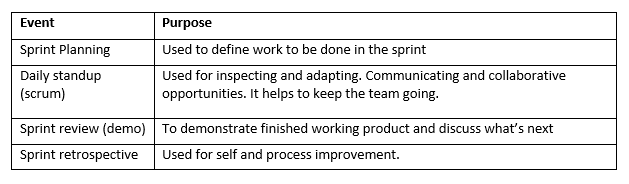
Scrum Events
Project Management Methodologies, Project Management Exam Prep, Project Management Preparation, Project Management Career, Project Management Study Material, Project Management Certification

Scrum Roles 

Project Management Methodologies, Project Management Exam Prep, Project Management Preparation, Project Management Career, Project Management Study Material, Project Management Certification

N.B.: The sprint is a time-boxed activity to complete the work. The sprint ends with a sprint review and then a retrospective. The product backlog may change, but once the sprint is planned, any new feature is sent to the product backlog and prioritized for the next sprint. A sprint normally lasts two weeks.

During the sprint, daily standups last for 15 minutes where each member tells the team what they did yesterday, what they plan to do today, and what is getting in their way. This is where the scrum master removes impediments.

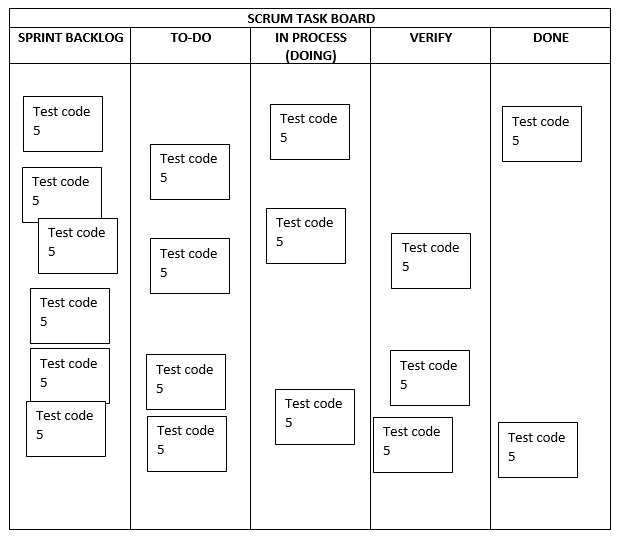
How does the scrum track progress in a sprint? 

The team uses visible information radiators such as burndown charts and task boards to track the progress.
Project Management Methodologies, Project Management Exam Prep, Project Management Preparation, Project Management Career, Project Management Study Material, Project Management Certification

#3. Disciplined Agile


This is an upgraded version of Agile. It combines the freedom of choice and suitability with proper guidance on narrowing choices. It is characterized by the freedom to choose your way of working (WoW). 

Disciplined Agile is context-dependent. It is about tailoring what works for you. It blends Scrum, SaFE (Scaled Agile Frameworks), Traditional (waterfall) approach, Kanban, eXtreme Programming, etc. It is an Agile optimization tool that can be used to extend agility from the team to the organizational level. 

It accelerates value delivery, which can help customers test the product in the market quickly.

The Disciplined Agile (DA) has seven principles:

Project Management Methodologies, Project Management Exam Prep, Project Management Preparation, Project Management Career, Project Management Study Material, Project Management Certification

1. The choice is Good: You have to choose the best-fit technique for your processes/situation. You have to understand all choices and trade-offs of selecting a particular choice. 

2. Delight Customers: The customer is the center of everything, whether internal or external. You have to make them happy. If you don’t delight them, someone else will and the customer will move elsewhere.

3. Be Awesome: Be awesome with what you do. If you are awesome, the client will love working with you.

4. Pragmatism: It implies doing what works, not what is usual. If something works best even in a traditional project approach, adopt it. Be as effective and efficient as possible.

5. Optimize Flow: Continuous flow of task/work by using Kanban. Your organization may have a complex flow system but you have to adapt to it. Ensure that communication is smooth between your team and the organization or even within different teams in your organization.

6. Context Counts: We all are unique and so is the organization’s culture. Understand the context and evolve with an effective strategy for the situation you face.

7. Enterprise Awareness: Ensure that the team is aware of their organization. It motivates them to align with the organization’s objectives and they will contribute to achieving larger goals.

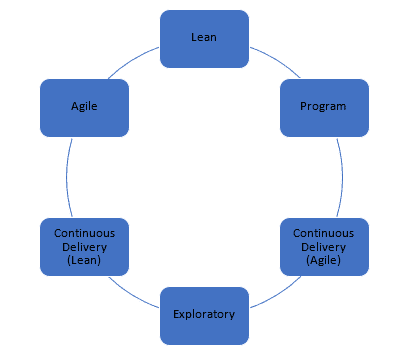
DA uses six different life cycles, the life cycles are:
Project Management Methodologies, Project Management Exam Prep, Project Management Preparation, Project Management Career, Project Management Study Material, Project Management Certification

You can choose the best fit for your needs.

DA’s process tailoring workshops help your team understand the importance of working together. It includes selecting a lifecycle, walking through the process goals one at a time, addressing the decision points, and deciding roles and responsibilities.

DA has four phases: Inception, Construction, Transition, and Deployment. 

As shown in the table below, these phases have 21 process goals:

Project Management Methodologies, Project Management Exam Prep, Project Management Preparation, Project Management Career, Project Management Study Material, Project Management Certification

Each process goal links to a decision point that further branches to various ways of achieving the goal. 

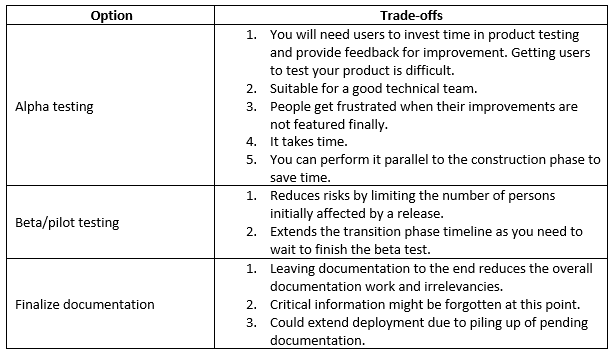
For example, assume you want to ensure production readiness.

Project Management Methodologies, Project Management Exam Prep, Project Management Preparation, Project Management Career, Project Management Study Material, Project Management Certification

DA believes business agility comes from freedom, not frameworks. So, it combines all known frameworks such as Lean and Scrum to eXtreme Programming and provides you with choices to select and deliver the consumable solution (not working software) to the market quickly. 

Disciplined Agile helps you choose the best agile solution for your situation.

While Agile produces working software, DA produces a consumable solution. A consumable is a usable product that is ready to be deployed to the market.

In summary, Disciplined Agile deals with decisions you need to consider, the options available to you, and the trade-offs associated with these options. You make your choice.

This helps products get released to the market sooner.

Further on the example above, let’s consider the trade-offs for each option.
Project Management Methodologies, Project Management Exam Prep, Project Management Preparation, Project Management Career, Project Management Study Material, Project Management Certification

#4. SaFE (Scaled Agile Frameworks)


Here you take the lean and Agile approach from team level to enterprise level. It is about transition and bringing different agile teams together. To avoid challenges, large framework implementation requires a systematic approach to incorporate best practices. 

SaFE helps in organizing several agile teams. Large companies like Microsoft and Ericsson have adopted the scaled agile approach. 

Before we discuss SaFE any further, let us understand Agile methodology.

Agile methodology is flexible compared to traditional project management methodology and adapts to changing needs against a pre-planned approach. It provides customers with a minimum viable product (working software) as early as possible. 

Agile is iterative and allows changing needs and dynamic environment realities. It breaks functional silos and pulls talent from each function into teams to achieve collaboration and coordination. 

If your organization is intending to scale agile from team to enterprise-level, they must assess the fitness level of the team and its culture, including:

◉ Leaders with clear vision.
◉ Changes are welcomed and must be anticipated.
◉ Time and cost are fixed, but the scope is flexible.
◉ Stakeholders’ interest in working software components.
◉ Active customer participation.

The above conditions are typical agile requirements. Since the organization is adopting an agile approach, the team’s mindset must be agile to follow an agile framework.

Choosing an agile framework to scale depends on some factors, such as:

◉ The number of agile teams in the organization.
◉ The company strategy and the impact of agile practices.
◉ Average size and complexity of agile projects.
◉ Critical success factors for the transition.

These factors are better described in the ten principles of SaFE, which are:
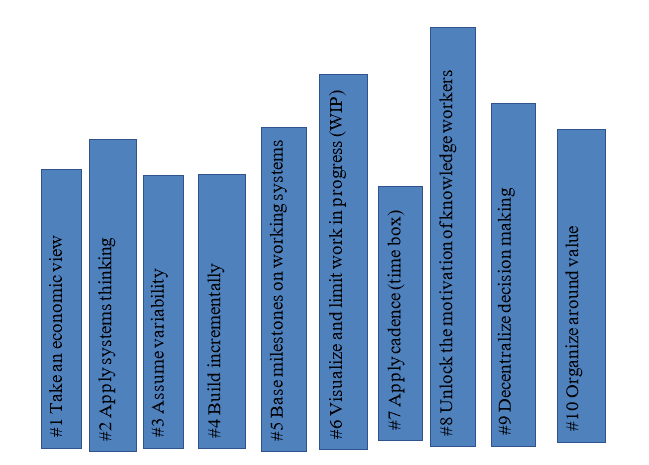
Project Management Methodologies, Project Management Exam Prep, Project Management Preparation, Project Management Career, Project Management Study Material, Project Management Certification

SaFE pioneered the Agile Release Train (ART) concept to organize teams around a value stream. They align teams (remember, scaled agile deals with several agile teams) to a shared business objective. A value stream is a set of actions that create customer value. 

The term train is used to show interconnection. The figure below shows agile teams 1, 2, and 3 aligned on a value stream for a desired solution/feature.

Project Management Methodologies, Project Management Exam Prep, Project Management Preparation, Project Management Career, Project Management Study Material, Project Management Certification

T1, T2, and T3 are agile teams, while S-is the solution or the value. The value stream is the movement from design through build, test to deploy.

The value stream is common in both Agile and lean. It is a set of actions that create customer value. SaFE provides enterprise agility that enables portfolio, program, and project (execution) teams to release a product to the market rapidly.

Some roles in SaFE are:

Project Management Methodologies, Project Management Exam Prep, Project Management Preparation, Project Management Career, Project Management Study Material, Project Management Certification

#5. Dynamic System Development Method (DSDM)


Agile and Kanban are subsets of lean and DSDM. DSDM is a framework applicable to constraint-driven projects where constraints such as cost, time, and quality are fixed, while scope (functionality/features) can change.
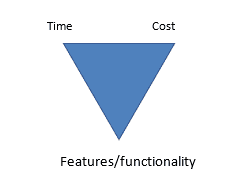
Project Management Methodologies, Project Management Exam Prep, Project Management Preparation, Project Management Career, Project Management Study Material, Project Management Certification

Its principles comply with agile such as collaboration, continuous and clear communication, iterative development, and delivery on time. 

DSDM has eight principles:

1. Focus on the business needs. Every project decision must be in sync with high-level business value.
2. Deliver on time-timebox project tasks, focus on business priorities.
3. Collaborate and build a one-team culture for increased understanding, greater speed, and shared ownership.
4. Never compromise quality. Test early and continuously. Agree with the quality level from the outset.
5. Build incrementally from a firm foundation. This implies that a good understanding is required before building a solution.
6. Develop iteratively to embrace changes from feedback.
7. Communicate continuously and clearly. Aim for honesty and transparency in all communication.
8. Demonstrate control-make plans and projects visible to all using, for example, Gantt charts and task boards.

Roles in DSDM
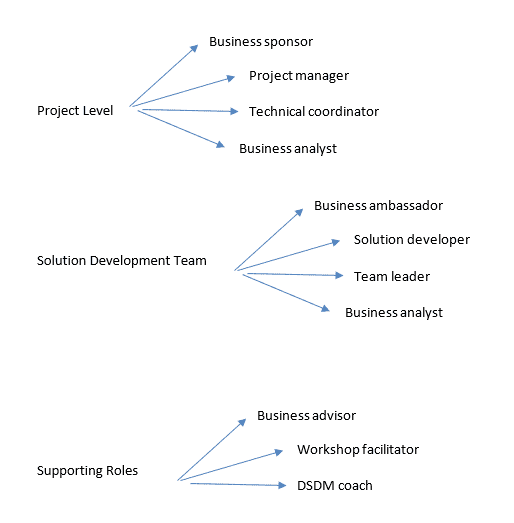
Project Management Methodologies, Project Management Exam Prep, Project Management Preparation, Project Management Career, Project Management Study Material, Project Management Certification

DSDM facilitates workshops. This helps engage stakeholders in solving a problem or developing a plan. The business owner, team lead, etc., can request this workshop.

The workshop is moderated by a neutral individual called the facilitator. The neutrality of the facilitator is important for a better outcome or workshop.

#6. Large Scale Scrum (LeSS)


LeSS is scrum extended to different scrum teams. It is a scrum applied to large-scale development. Here you still retain the basic attributes of a scrum, such as: 

◉ Teams work on their sprints concurrently.
◉ One product owner handles the team.
◉ Teams are co-located.
◉ The teams work with one definition of done.
◉ One potentially shippable product from all the teams.
◉ One sprint for all.
◉ One product backlog for all, but each team has its own sprint backlog.

LeSS Principles

◉ Systems thinking: Everyone in the organization should focus on the whole product. They should know that there is no value in separate parts but integrated parts. It helps break silos, has a long-term team view, finds root cause solutions, and has fewer impediments. The team needs to understand the impact of their actions on the surrounding environment.
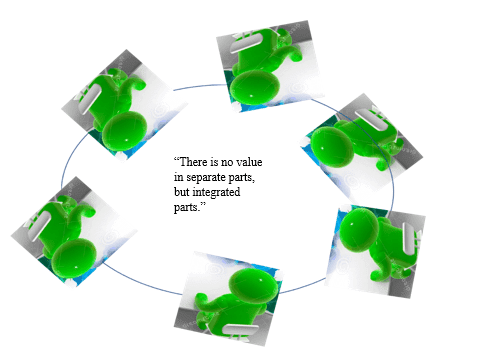
Project Management Methodologies, Project Management Exam Prep, Project Management Preparation, Project Management Career, Project Management Study Material, Project Management Certification

Other principles are

◉ Transparency 
◉ Customer-centric
◉ Lean thinking
◉ More with LeSS (Large Scale Scrum)
◉ Continuous improvement
◉ Queuing Theory (reducing batch sizes to shorten delivery time)
◉ Empirical process control

#7. Scrum of Scrum


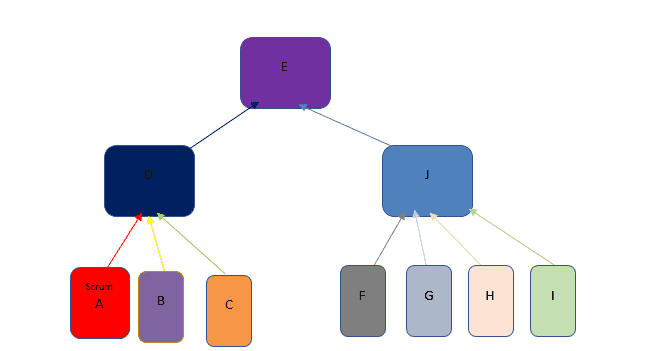
This project management methodology is useful when work from several scrum teams needs to be coordinated. Representatives from each scrum meet to coordinate their work. These representatives are referred to as “Ambassadors.” 

The meeting is similar to the daily stand-up meeting where each representative reports completed work, the next assignments, and impediments. This meeting (Scrum of Scrums) aims to ensure smooth coordination of work. 

This Scrum of Scrum can further extend to the Scrum of Scrums of Scrums depending on project size; the principle for coordination is the same.  

Scrum of Scrum is also called meta-scrum. The duration of a scrum meeting is about 15 minutes. This is still retained at the Scrum of Scrum meetings.
Project Management Methodologies, Project Management Exam Prep, Project Management Preparation, Project Management Career, Project Management Study Material, Project Management Certification

A, B, and C are scrum teams with one ambassador attending D, a Scrum of Scrums.

Similarly, J is the Scrum of Scrums of scrum teams F, G, H, and I.

The ambassadors of Scrum of Scrums D and J meet at E, Scrum of Scrums of Scrums.

It helps to ensure that the scrum teams fit together and operate cohesively.

#8. Extreme Programming (XP)


It started in 1996 when Chrysler Corporation embarked on a payroll restructuring program, the C3 (Chrysler Comprehensive Compensation) system. Their development team adopted a way of working that metamorphosed into Extreme Programming. 

Extreme Programming (XP) has an agile mindset based on values, principles, and ways of working. XP is the foundation of excellent software development.

This is like refining, where you aim to get the purest product. Quality is at its peak. It requires repeated cycles of testing and refactoring.

The core values of Extreme Programming are Communication, Courage, Respect, Simplicity, and Feedback.

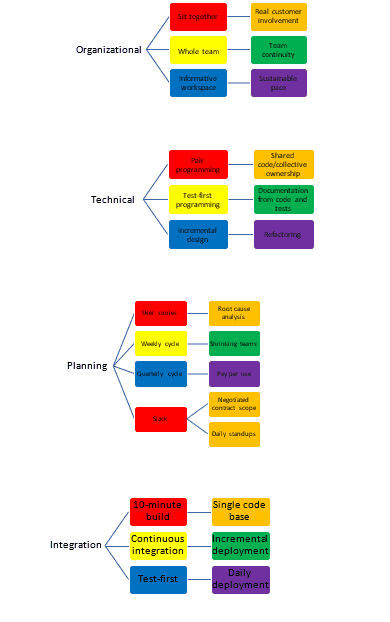
Extreme Programming has four practice areas: organizational, technical, planning and integration. These areas require primary practices, which are necessary for secondary (corollary) practices. 

In the figures below, the practice areas are depicted with their corresponding primary and corollary practices. Red, yellow, and blue (primary colors) represent the primary practices, while secondary colors (orange, green, purple) represent the corollary practice.
Project Management Methodologies, Project Management Exam Prep, Project Management Preparation, Project Management Career, Project Management Study Material, Project Management Certification

The primary practices must be in place before you implement secondary practices.

For example, with no pair programming, it will be difficult to have a shared code/ownership mindset. 

The workspace for Extreme Programming must have visual aids such as flip charts or task boards to communicate status and progress. 

You should maintain the workload of the team to avoid burnout. They should not work more than 40 hours per week.

Slack helps in planning to avoid delays because of unlikely events. It is a set of minor activities built into the planning to meet the deadlines.

Small projects have a higher success rate. So, XP recommends incremental delivery. Break down the huge mass into manageable increments of small but regular releases with only the required functionality. Release time is between 2-4 weeks. 

Simplicity means designs are as simple as possible. XP doesn’t venture into the complicated end. They keep it as simple as possible and work with small batches. 

No wasted motion. Only the important part is coded. Code is only used to suit the current functionality. There are no add-ons, no wasted resources. The XP only modifies to emplace newly added features. Small releases are the emphasis here. 

XP decomposes the project into small deliverables. Early small releases provide user feedback and Return On Investment (ROI).

Other practices are: 

◉ Continuous Integration: It implies that developers integrate their work daily and do not leave anything out. It is a daily commitment, thus leaving room for early error detection and correction. It helps save accumulated rework.

◉ The real Customer Involvement: This is called onsite customers. This person represents end-users who are expected to provide daily feedback on work done and the next desirable feature.

◉ Pair Programming: In pair programming, the software is built by two programmers sitting side-by-side at the same workstation. This helps code review by a different programmer, resulting in a better product. Pair programming helps knowledge sharing amongst developers as pairs switch. As partners change throughout the day, pair programming can facilitate communication within the team.

◉ Refactoring: This is a quality testing method. It is the reworking of the code for better quality. It is like cleaning the code and it should be a daily routine. You use it to clear the technical debt. You clean up the code without modifying its behavior. Thus improving maintainability. It supports a continuous approach to paying down existing technical debt, though it may slow down current work. It will increase development productivity and save future costs.

◉ Collective Code Ownership: This implies everyone who notices a defect corrects it immediately. It works along with pair programming.

#9. KANBAN


KANBAN is a Japanese term that means signboard. It is about workflow management and ensuring visualization for all. In KANBAN, you hold a card that shows the upstream worker that you are waiting for the work. This is called a pull workstream. 

A typical Kanban board is shown below. It is used to manage work.

Project Management Methodologies, Project Management Exam Prep, Project Management Preparation, Project Management Career, Project Management Study Material, Project Management Certification

Sometimes this board is known as an information radiator. This board shows the project status on user stories such as done, ongoing, yet to do.

In Lean manufacturing, the Kanban method is used for scheduling inventory control and replenishment. It is derived from lean principles. The KANBAN methodology is easy to implement.

The basic principles of this methodology are:

Continuous Delivery

You do not start new tasks while you have some work in progress (WIP). However, as soon as WIP completes, you should start the new tasks. There must be a continuous workflow.

In Kanban (like Lean), the aim is to eliminate the WIP and increase productivity. There is no value in WIP nor new activity but in a finished task. You set a limit for the WIP and don’t exceed it. 

This continuous and controlled flow prevents the team from being bogged down by overcommitment, which could negatively affect the progress.

Increased Efficiency

Non-value activities are eliminated to focus on business value, thus increasing efficiency.

Reduction of Waste

You can visualize the workflow; hence, waste can easily be removed. With Kanban, organizations stop starting and start finishing.

Lastly, Kanban implements a feedback loop used to improve service delivery. The feedback loop can be reviews or meetings.

One application of the KANBAN method is in manufacturing, where cars are built only on order. Resources are only committed to value. There is no waste. 

#10. Lean


Lean is a set of management practices rooted in the Toyota Production System, where they tried to eliminate non-value activities to increase operational efficiency.

The lean concept focuses on value, small batch sizes, elimination of waste, short cycles, frequent reviews, and retrospectives with small improvements.

The seven principles of Lean are:

1. Eliminate Waste: Waste is any activity that does not add value to the finished product. Seven wastes in a software project are extra features, extra processes, partially done work, motion, waiting, task switching, and defects.

2. Build Quality in: Defects should not be allowed, but when this is impossible, try to minimize them. You will do extra work to validate, fix and iterate. Agile does this using Test Driven Developments (TDD), pair programming, and modeling with others (mob modeling).

3. Create Knowledge (Amplify Learning): Team members should be encouraged to reflect and act to improve their approach regularly. Iteration allows team members to learn what exactly the stakeholder wants.

4. Defer Commitment: Keep options open, and use incremental delivery to avoid wasting effort on creating features that were not useful. Software tools for this are emergent designs, automated testing, and patterns thinking.

5. Deliver Quickly: An effective organization gives teams only what they can do so they don’t burn out due to overcommitment. They also allow the team to self-organize, and they deliver quickly.

6. Respect People: Motivate and enable a team to empower and not control them.

7. Optimize the Whole: Look at the bigger picture. Understand how the product synchronizes with the high-level organizational/business objective. The aim is to deliver valuable outcomes to stakeholders.

Source: pmstudycircle.com

Saturday, 3 July 2021

CAPM Requirements: CAPM Certification Exam Eligibility Criteria

CAPM Requirements, CAPM Certification Exam, PMP Tutorial and Material, PMP Career, PMP Study Material, PMP Guides, PMP Learning, CAPM Preparation, CAPM Career

If you are interested in applying for the CAPM certification, you should understand the CAPM requirements. Knowing the CAPM eligibility requirements is the first step towards becoming a CAPM.

However, before we discuss the CAPM eligibility criteria, let us first understand the CAPM certification.

More Info: Certified Associate in Project Management (CAPM)

CAPM stands for “Certified Associate in Project Management”. This is a certification offered by the Project Management Institute (PMI) in the USA to professionals interested in project management but who have little or no project management experience.

PMI is a global body that awards many project management certifications, and the CAPM certification is one among many.

However, having experience is beneficial, which I will explain in the next section.

CAPM Requirements

CAPM Requirements, CAPM Certification Exam, PMP Tutorial and Material, PMP Career, PMP Study Material, PMP Guides, PMP Learning, CAPM Preparation, CAPM Career

You have to fulfill two eligibility requirements to apply for the CAPM certification exam:

1. Education
2. Training

CAPM Requirement #1 – Education


You must hold a secondary diploma (often a high school diploma) or any global equivalent to be eligible for the CAPM exam.

CAPM Requirement #2 – Training


You have to attend a formal 23 contact hours training program in project management.

Should I Attend a PMP Training Instead of CAPM Training?

I used to recommend that CAPM aspirants attend PMP training instead of CAPM training because if they apply for the PMP exam in the future, they won’t have to attend another training for the PMP exam. (Please note that the contact hours never expire.)
Now things are different.

PMI waived the 35 contact hours requirements for active CAPM holders in April 2019. Therefore, even if the PMP is your goal after the CAPM exam, choose a CAPM training program instead of a PMP training program.

If you are looking for a CAPM training program, I recommend you join the CAPM Prepcast online training program to save time and money. This is an affordable CAPM training program developed by world-famous training expert  Cornelius Fichtner.

FAQ on CAPM Eligibility Requirements


Now we can discuss some frequently asked questions about the CAPM requirements.

#1.  I don’t have project management experience. Can I apply for the CAPM exam?

Yes, you can.

The CAPM exam is for professionals who do not have project management experience. If you have a high school diploma, you can apply for the CAPM exam after getting 23 formal contact hours of CAPM training in project management. 

#2. Can only Registered Education Providers (REPs) or Authorized Training Providers (ATP) Provide the CAPM Training?

No, this is not correct.

You can attend the training through seven methods. These methods are:

A. PMI Registered Education Providers (REPs)
B. PMI Authorized Training Partners (ATPs)
C. PMI chapters
D. Employer/company-sponsored programs
E. Training companies or consultants (e.g., training schools)
F. Distance-learning companies, including an end-of-course assessment
G. University/college academic and continuing education programs 

The following do not satisfy the educational requirements: 

◉ PMI chapter meetings

◉ Self-directed learning (e.g., reading books, watching instructional videos, or sessions with coaches or mentors)

#3. Can I apply for the PMP exam after passing the CAPM exam?

If you are an active CAPM, you get only one concession: you don’t have to attend any training.

Now, if you have the required project management experience, you can apply for the PMP exam.

#4. When will my CAPM training expire?

Please note that your CAPM training never expires. Once you complete the training and earn contact hours, you can apply for the CAPM exam at any time in your life.

Source: pmstudycircle.com

Friday, 2 July 2021

What is a Project?

PMP Exam Prep, PMP Tutorial and Material, PMP Study Material, PMP Learning, PMP Guides, PMP Certification, Project Management, PMP Career

Let’s start with the project

What is a Project?

According to the PMBOK Guide, a project is defined as a “temporary endeavor to create a unique product, service or result.”

Learn More: PMI Project Management Professional (PMP)

Projects are undertaken to fulfill objectives by producing deliverables. A deliverable is a unique and verifiable product or result; it can be tangible or intangible.

The term “temporary” is not applied to the project output; the project is finite, not the result.

Projects create a unique product, result, or service that is not repetitive. Though many construction projects build similar buildings, bridges or dams, etc., they are all unique products.

If the output is repetitive, it is an operation. Operations have repetitive output; for example, car manufacturing.

Project Features

A project has the following features:

◉ Temporary Nature: All projects are temporary in nature. This means, once the project’s objective is achieved, it ceases to exist.

◉ Definite Timeline: A project has a definite, measurable, and achievable timeline with a definite start and end. A project cannot continue forever; it has a definite duration.

◉ Produces Output: All projects produce an output. The output can be a unique product or an enhancement, a unique service, or a result.

Project Examples

A few examples of a project are:

◉ Constructing a building

◉ Developing a new pharmaceutical compound

◉ Expanding a tour guide service

◉ Merging two organizations

◉ Exploring for oil in a region

◉ Modifying an organization’s software system

◉ Conducting research to develop a new manufacturing process

◉ Improving a business process within the organization

The most important characteristic of a project is its temporary nature; the project ends when it achieves its objective. The project can also end when:

◉ Funding is exhausted

◉ The project is no longer necessary

◉ Resources are no longer available

◉ The project is terminated for legal cause or convenience

Project Life Cycle

Projects undergo different phases, from initiation to completion. These phases are known as the project life cycle, which is a collection of logically related project processes. 

The phases can be iterative, overlapped, or may be sequential. Phases are time-bound with a start and end or control point. These control points are known as “phase gate,” “control gate,” or “phase review.” 

Though projects vary in size and the amount of complexity they contain, a typical project can be mapped to the following project life cycle:

◉ Starting the project

◉ Organizing and preparing

◉ Carrying out the work

◉ Closing the project

PMP Exam Prep, PMP Tutorial and Material, PMP Study Material, PMP Learning, PMP Guides, PMP Certification, Project Management, PMP Career

A project life cycle has many phases for developing a product, result, or service. These are called developmental life cycles. A project cycle can be:

1. Iterative Life Cycle: Scope is planned early, but time and costs are modified as more scope details become available while the project progresses. Iterations develop the product through a series of repeated cycles, while increments successively add to the functionality of the product.

2. Incremental Life Cycle: The deliverable is produced through a series of iterations that successfully add functionality within a predetermined time frame.

Project Phases

During their life cycle, all projects go through five phases. These phases are:

1. Initiation

2. Planning

3. Execution

4. Monitoring and Controlling

5. Closing

Initiation Phase

This is the first phase of the project where you officially launch the project. This phase has two important processes: approving project charter and identifying project stakeholders.

The project charter is the most important project document and contains vital information. It may have a result of the feasibility study, business case, summary cost-benefit analysis, key assumptions and constraints, project milestones, budget, duration, important stakeholders, etc.

It shows the project objective, project scope, and list required to complete the project and assign a project manager. 

Identifying project stakeholders is the second process after the project charter is signed. 

Your project is successful if your stakeholders are satisfied. If you fail to identify your stakeholders, you will face many hurdles in successfully completing the project.

You must identify your project stakeholders at the beginning of the project and manage them efficiently to complete the project successfully.

Planning Phase

In this phase, you develop a comprehensive and detailed project management plan. 

The project plan is also sometimes known as the project management plan. This document explains in detail how you will execute the project, monitor and control, and close.

You start your planning by collecting requirements and defining the scope. You then develop the schedule, set the deadline, and assign resources. 

Then you develop other subsidiary project management plans, such as cost management plans, resource management plans, procurement plans, and risk management plans.

You may hold your first project kick-off meeting in this phase.

Rolling Wave Concept

Many times, the detailed project scope is often not available at the initial stage of the project. So you make detailed plans for the near-term work for which a detailed scope is available. For the rest of the work, you go for high-level planning. This phenomenon is known as “rolling wave planning.”

Execution Phase

This is the longest phase of the project life cycle. In this phase, you develop the real product and spend most of your time and budget.

As a project manager, you have to manage your stakeholders, processes, and communication in this phase.

Any delay in this phase will affect your schedule, and you may surpass your budget and schedule. This will affect the team morale and thus the project’s progress.

You have to be proactive throughout the execution phase. 

The project output is developed in this phase.

Monitoring and Controlling Phase

This phase happens concurrently with the execution phase. While executing the project plan, you will continuously monitor the progress for any deviation from the baseline.

If you observe any deviation in your plan, you will immediately take corrective action to solve the problem. You will also take preventive action to stop deviations from occurring.

In this phase, you control all aspects of your projects, including scope, cost, schedule, resource, risk, procurement, communication, etc.

Closing Phase

This is the final phase of the project, and it has only one process: close project.

The key activities of this process are final product transition, final report preparation, project documents update, and updates in the organizational process assets.

Closing a project is not about just closing the project. You also complete the final transition of the product or service to the client. 

You will check if all procurement contracts are closed and invoices are paid.

You will update your lessons learned document and other project documents. After updating these documents, you will store them in repositories as organizational process assets.

Finally, you will disband your project management team and release all team members so the organization can assign them to other projects.

Source: pmstudycircle.com

Wednesday, 30 June 2021

How to become a future-proof Organization

Prince2 Certification, Prince2 Exam Prep, Prince2 Tutorial and Material, Prince2 Career, Prince2 Preparation

The common assumption is that organizations who are investing in technologies such as Artificial Intelligence, automation and Virtual Reality are future-proofing themselves. But is that necessarily the case? Is becoming future-proof really as simple as spending big on technology? Or what more can we do to give our business the best possible advantage going forward?

What does it really mean to be future-proof?

Without getting too philosophical, the future is not a single destination, point in time, or endgame which you need to reach. The future is ongoing. And so, to be ‘future-proof’ is less about clambering together IT innovations in order to be ready for a (non-existent) big event, and more about having your finger on the pulse of continual change.

Continual service improvements and digital transformation is a topic covered in a recent ITIL blog, and changing technology plays a leading role in being future-proof. Twofold to this is having a future-proof culture. Equally important as upgrading your tech is developing your team, their skillset and practices establishing a culture of change.

Companies who fail to take steps to change, adapt and future-proof themselves risk losing business. They will be missing opportunities, letting customers down, and losing out to competitors who respond to changing needs more quickly. In order to be future-proof, businesses must be agile and responsive across the board. Pre-empting and adapting to change at speed gives an unrivalled competitive advantage and is the true definition of future-proof.

How to make smart tech investments for the future

Whilst there is some truth in that acquiring the latest tech will future-proof your business, it is essential that any investment is made smartly. There is little use purchasing any gadget, tech or gizmo that impresses you if it does not have clear and defined benefits for your company. Likewise, tech spending can go to waste if you don’t first consider your team’s ability, or desire, to use it. This may sound simple, but a surprising number of leaders fall into these traps.

So how can you make smart tech investments? A good first step is to avoid the technology-first approach. Don’t force your team and your processes into fitting a mould set by the tech. Instead, start by defining the challenges you want to overcome, then research how technology can help you to do this.

Take automation, for example. There are likely areas of your business which you can automate and technology on the market to help you to do this. The pace of business is fast, and it is only going to get quicker into the future. By automating otherwise lengthy processes, you not only speed things along, but also become more responsive – a trait which has proven extremely valuable for companies during the pandemic.

Automation, or in fact, any tech should not be introduced to eliminate or replace employees, but to bring value to the business. IT such as big data, analytics and automation improves accuracy as well as speed, and is best used for making strategic decisions. This is where your team can add real value. Technologies should enable them to direct change, improve customer satisfaction, better and speed up services, and ultimately outperform competitors.

What it means to have a future-proof mindset

The top thing you can build into your team’s toolkit is the ability to adapt to change. This may be a challenge, but by building some clever practices into your company culture, it is achievable. A key reason why many companies lag behind when it comes to the fast-paced world of business is down to their mindset and consequently their practices.

Refine your team’s ability to ‘keep up’ with advances in technology by introducing smart practices such as agile. For businesses using traditional methodologies, agile can seem like a big jump, far removed from what employees are used to. But here at PRINCE2 we offer a professional development course which bridges that gap – PRINCE2 Agile. The course combines the flexibility of agile with the framework of PRINCE2. Change is a key theme within the course, and training will enable your team to become more adaptable and responsive.

Prince2 Certification, Prince2 Exam Prep, Prince2 Tutorial and Material, Prince2 Career, Prince2 Preparation

Shifting the mindset within your business ultimately starts with leadership. Leaders have great influence over the culture of a company, and it falls to them to initiate change and provide innovative direction. Whether that is getting people across different departments to work together, launching training, or introducing skill sharing programmers. Any initiative which encourages collaboration, strengthens talents, or sparks enthusiasm will benefit change efforts. It will promote agility, responsiveness and go a long way towards improving processes for implementing change faster and with greater accuracy.

The future starts now

To not only survive, but flourish in the tech-focused future, companies must shift their mindset and strategically use IT to bring value to business. Organizations aiming to future-proof themselves should look to become more agile in their practices. They should also have a customer-centric focus and look to become increasingly data-driven.

Reimagining your IT operating models may be part of a digital transformation strategy, but not all changes will happen overnight. Developing a plan for continual improvements which can happen incrementally and evolve over time will lead the business well into the future. Change is happening fast, and to be ‘future-proof’ is above all, about being ready for change. As technology advances, having a talented, agile team will help you find ways to not just keep up, but get ahead. With the right training and mindset, IT leaders and their teams can ride out digital disruption smoothly, adapting to change, and overcoming barriers with innovation and digital best practices. In this way, they can harness IT to create more value, optimise agile decision making and build success.

Source: prince2.com

Monday, 28 June 2021

Career in Project Management

Career in Project Management, Project Management Exam Prep, Project Management Preparation, Project Management Exam Certification, Project Management Learning, Project Management Guides, PMP, PMP Certification, PMP Exam, PMP Prep, PMP Tips, capm, CAPM Certifications

All industries and professions need projects for their growth, survival, and innovation. So, the project management profession will always be in demand, and if you intend to grow your career in this profession, you have made the right choice.

More Info: PMI Certified Associate in Project Management (CAPM)

Project management is a vast field, and you will have many career opportunities in this profession, and project manager is one of them.

This blog post will give you a general idea about developing your career path in project management.

Let’s get started.

A Career in Project Management

Before we discuss a career in project management, let us understand the terms project and project management.

As per the PMBOK Guide, a project is a temporary endeavor to create a unique product, service, or result. They are undertaken to fulfill objectives by delivering a deliverable. A deliverable is a unique and verifiable product or result; it can be tangible or intangible.

Project management is an application of knowledge, skills, tools, and techniques for project activities to meet the project requirements.

In project management, you will have many career opportunities; let’s start with a career as a project manager.

Career as a Project Manager

Regardless of industries, qualified project managers are in the highest demand, which will continue to rise.

Project managers are in charge of projects, and they are responsible for completing the project. 

Their job responsibilities include:

◉ Developing a project management plan

◉ Recruiting the project team

◉ Carrying out the project work

◉ Monitoring and controlling the project work

◉ Delivering the project deliverable

◉ Closing the project

Project managers have the support of their team members to complete these tasks. The team members include subject matter experts such as planning engineers, quality control personnel, construction supervisors, foreman, site engineer, and construction workers.

As a project manager, you should have many skills. The most important skills are leadership, negotiation, and communication skills.

The other essential skills are:

◉ Problems solving skills

◉ Organization skills

◉ Leadership skills

◉ Analytical skills

◉ Risk management skills

According to some PMI surveys, the demand for project managers is rising, and the industry will have 22 million job openings through 2027.

All industries need projects and project managers, though they are very common in construction, oil, and gas, IT industries, etc.

Project managers get a good salary, and all professionals in this profession want to become a project manager. According to Indeed.com, the average salary for a mid-level project management position is about 77,000 USD per year, ranging from 22,000 USD to 174,000 USD.

To become a project manager, you must have enough experience in different roles in the project. For example, if you have several years of experience as a project engineer, planning engineer, site engineer, etc., you can get promoted to assistant project manager and then project manager.

The experience required depends on the industry. The construction and oil and gas industries require more experience than the IT field.

A project manager’s job is very challenging. All projects are unique and project managers have to start each project from scratch with limited resources.

They must be updated with the latest advancements in project management to stay ahead..

They may be required to have some globally recognized certification, such as PMP or PRINCE2.

Other Career Opportunities in Project Management

In project management, some other key roles are:

◉ The project coordinator or expeditor

◉ Project planner

◉ Site engineer

◉ Quality manager

◉ Risk manager

◉ Foreman/supervisor

◉ Worker

The Project Coordinator or Expeditor

The project coordinator or expeditor plays a vital role in project management. You can also call them the project manager in waiting. Sometimes, they are known as project administrators.

These people help project managers with administrative tasks and sometimes can replace them in their absence. Their main role is to ensure that day-to-day activities are moving as planned so the project manager can take care of high-level tasks and issues.

Project Planner

For small organizations, advanced knowledge of excel will be sufficient. However, to work in big organizations as a project planner, you must know special planning software such as Primavera or MS-Project.

You can also go for some global certification like PMI-SP. This certification is from Project Management Institute (PMI) the USA, for scheduling professionals.

Site Engineer

You will find a site engineer with construction projects. These professionals stay on the site and help site workers carry out construction activities.

For this position, you will require a diploma or engineering degree in a civil or mechanical discipline.

Quality Managers

Quality personnel includes quality assurance and quality control.

Quality assurance professionals ensure that the developed procedures are correct and as per the standard guidelines and company policies.

Quality control people ensure that the project management team is following the right procedure and deliverables are defect-free.

For quality assurance, you can go for the ISO lead auditors course, and for quality control, you can look for ASQ.org.

Risk Manager

This is a specialized field and suitable for professionals who have enough project management experienced and are involved with risk management.

If you are interested in risk management and want to grow your career in this field, you can go for the PMI-RMP certification.  This is a globally recognized certification for risk management professionals.

Foreman/Supervisor

The foreman works under site engineers and deals with construction workers to carry out day-to-day construction activities.

The education qualification is a diploma and experience in the relevant field.

Workers

Workers are at the lowest position in the hierarchy. They carry out the construction work and report to the foreman or supervisors.

Career in Project Management, Project Management Exam Prep, Project Management Preparation, Project Management Exam Certification, Project Management Learning, Project Management Guides, PMP, PMP Certification, PMP Exam, PMP Prep, PMP Tips, CAPM, CAPM Certifications

No education qualification is required for this position, though physical fitness is essential as the work may require physical labor.

How Certification Helps in the Project Management Career Path

It is a simple truth that certified project managers get a higher salary than non-certified project managers. Many organizations have made it necessary to have a globally recognized project management certification to apply for the project manager position, which you may notice on job portals.

If you live in the UK, Australia, or Europe, PRINCE2 is a good choice.

However, for the rest of the world, the PMP certification is the best choice. 

How to Start Your Career in Project Management

Project management has a lot of career opportunities. You should identify your interests and skills and then move into project management.

Let us start with educational qualifications. Usually, you will be required to have at least an undergraduate degree to apply for the project manager position.

If you want to pursue your career in the construction field, it should preferably be an engineering degree. In the IT industry, computer engineers or any other global equivalent would be sufficient.

Now, let’s look at experience. Let us assume that you have no experience, but you want to grow your career in project management.

In this case, I would recommend you go for the CAPM certification. Requirements for the CAPM certification are lenient, and it does not require project management.

Having a CAPM certification shows that you have the required knowledge and dedication to move into project management.

Also, if you have experience in different fields and want to advance your career in project management, you can go for the CAPM certification.

After getting this certification, you can apply for an entry-level position in project management and get some experience.

Now, once you earn the required project management experience, you can go for the PMP certification. It will boost your career in project management.

For the IT industry, certifications such as Agile/Scrum will also be helpful.

Source: pmstudycircle.com