Monday, 6 November 2023

What is Engineering Project Management? Overview, Methodology & Tools

What is Engineering Project Management? Overview, Methodology & Tools

Engineering isn’t just about understanding principles for designing solutions; it’s also about effectively bringing those solutions to life in the real world. That’s where Engineering Project Management shines, bridging the gap between theoretical designs and tangible outcomes.

By merging technical prowess with management acumen, engineering project managers play a pivotal role in the fruition of products and processes across various sectors, from architecture to finance. 

This guide will delve deep into engineering project management and address some questions.

What is Engineering Project Management?


Engineering Project Management is a discipline that applies rigorous project management principles to engineering. It’s not just about conceptualizing designs or crafting solutions; it’s about meticulously guiding those innovations from inception to completion.

Here’s a closer look at what this entails:

  1. Bespoke Framework: Unlike generic project management, the engineering variant is tailored to accommodate the complexities and nuances of engineering projects. This might include dealing with advanced technologies, strict regulatory standards, or intricate design specifications.
  2. Multifaceted Planning: A detailed plan lies at the main criteria of engineering project management. This includes crafting a Work Breakdown Structure (WBS), establishing milestones, and forecasting potential risks. Every step is calculated to align with the project’s objectives while ensuring optimal resource allocation.
  3. Execution with Precision: Engineering projects demand precision. Project managers in this realm oversee tasks and ensure that every phase, from design to testing, meets the stringent quality benchmarks synonymous with engineering feats.
  4. Collaborative Efforts: The interplay between various professionals is vital. Engineering project managers often work with designers, developers, testers, and UX specialists, ensuring that every voice and expertise contributes to the project’s success.
  5. Monitoring and Control: With technology and methodologies constantly evolving, staying on track requires vigilant monitoring. Using tools like Earned Value Management (EVM) or Critical Path Method (CPM), managers can gauge project health and make timely adjustments to keep things on course.
  6. Endgame – Closing and Review: Once a project reaches its culmination, it’s not just about delivery. It involves a thorough review, gathering feedback, and deriving lessons that can be applied to future projects.
  7. Benefits Galore: Integrating engineering prowess with project management leads to many advantages. These include streamlined operations, enhanced resource utilization, cost-effectiveness, improved team collaboration, and higher project success rates.

Engineering Project Management is the bridge that connects engineering brilliance with real-world application. Ensuring projects are timely, within budget, and up to par with quality standards is instrumental in successfully realizing engineering visions.

How Does Engineering Project Management Differ From Engineering Management?


Engineering project management and engineering management are two terms that often get interchanged, yet they serve distinct roles in the engineering landscape. Let’s break down their differences to understand their unique responsibilities and focus areas.

Criteria Engineering Project Management   Engineering Management 
Scope of Operation A broad perspective on the project. Manages both technical and non-technical aspects Focuses on intricate technical details and evaluates the work of engineers
Task Nature   Oversees the entire project lifecycle, from start to finish   Handles regular engineering tasks irrespective of a project’s lifecycle
Main Focus   Champions the holistic success of the project, emphasizing timelines and budgets   Concentrates on technical excellence, including code quality and individual output
Key Responsibilities 
  • Ensuring adherence to scope and budget
  • Crafting project documentation
  • Monitoring project progress
  • Coordinating resources
  • Managing scope changes 
  • Ensuring technical accuracy and efficiency
  • Overseeing routine engineering tasks
  • Maintaining technical standards

The Engineering Project Manager acts as a compass, directing the overall journey of a project. In contrast, an Engineering Manager is like a magnifying glass, emphasizing the finer technical details and ensuring their precision.

Engineering Management vs. Project Management


Though they converge on many skills and experiences, engineering management and project management are distinct roles that many engineers might occupy at various career stages.

Roles:

At its core, an engineering manager supervises teams of engineers, prioritizing their professional growth and development. Conversely, a project manager helms cross-functional teams with an eagle eye on the project’s business value.

Education:

Both roles necessitate a foundational education and background in engineering, and individuals can springboard from any engineering discipline into either position. While engineering managers typically oversee engineers across various specializations, project managers captain projects spanning many industries.

Organizational Structure Fit:

In the organizational structure, engineering project manager roles can be spotted at multiple tiers, ranging from early-career contributors leading modest, short-duration projects to executives directing colossal mega-projects with vast teams. 

Such roles offer engineers a platform to hone their leadership prowess. As they exhibit proficiency, they’re entrusted with increasingly complex projects. 

In contrast, engineering managers predominantly nestle between mid-tier leadership and the executive echelons.

Experience:

For budding professionals, the project manager mantle might be within reach a mere few years post-graduation. However, the engineering manager title typically beckons seasoned engineers with a reservoir of experience and expertise.

What Skills Do You Need For Engineering Project Management?


An engineering project management typically requires a profound grasp of engineering principles and technological applications. Such insights empower one to plan and implement projects proficiently, as it can accurately gauge the necessary tasks, resources, and human capital involved. 

Those needing a direct engineering background often rely on project engineers and teammates for technical guidance during the project’s duration.

Besides technical prowess, engineering project management also requires excellence in various project management competencies, including

  1. Adaptability: A competent engineering project manager can seamlessly navigate diverse work methodologies and adjust to fluctuating timelines and goals.
  2. Contract writing: Some take on the responsibility of drafting contracts to kick-start projects and negotiating terms with clients to ensure clarity and minimize potential future obstacles.
  3. Leadership: The engineering project manager’s role often entails galvanizing the team and fostering an environment conducive to collaborative excellence.
  4. Productivity Oversight: Engineering project managers routinely assess the productivity levels of their team, potentially reallocating tasks to optimize efficiency.
  5. Strategic Planning: Central to the engineering project manager’s role is the crafting of project timelines, task duration estimates, and budget adherence.
  6. Problem-Solving Prowess: With a holistic view of the project and its intended results, engineering project managers are uniquely positioned to address and resolve challenges.
  7. Effective Communication: The engineering project manager’s capacity to articulate ideas lucidly ensures they can convincingly present plans and designs to stakeholders and synchronize various team segments.
  8. Business Insight: Recognizing the business implications of engineering project manager’s projects, they ensure the initiative consistently aligns with organizational value propositions.

Engineering project management harmoniously blends technical understanding with managerial finesse, ensuring projects meet technical standards and align with broader business goals.

Engineering Project Management Methodologies 


Engineering project managers employ Agile, Scrum, and Waterfall methodologies to execute engineering tasks. For each project’s success, it’s crucial for organizations and these managers to demonstrate adaptability and thoughtful planning.

Waterfall

The Waterfall methodology is a linear and sequential approach where each project phase is completed fully before the next one begins. Best suited for projects with clear and unchanging requirements, it emphasizes meticulous planning and design upfront.

Its step-by-step nature ensures clarity but may be rigid in accommodating changes once the process begins.

Agile

A stark contrast to the Waterfall model, Agile champions flexibility. By breaking down the project into smaller, manageable chunks known as iterations or sprints, Agile permits frequent reassessments and refinements of project scope.

This method prioritizes collaboration and customer feedback, ensuring the end product aligns closely with client needs.

Scrum

An offshoot of Agile, Scrum operates in short, time-boxed sprint cycles, typically lasting two to four weeks. At the end of each sprint, a potentially shippable product increment is delivered, allowing for iterative refinement based on stakeholder feedback.

Scrum’s framework involves roles like the Scrum Master and Product Owner and rituals like Daily Stand-ups and Sprint Reviews.

Lean

Stemming from manufacturing principles, the Lean methodology emphasizes the elimination of waste in any form – be it time, resources, or labor. It aims to streamline processes, reduce cycle time, and ensure that every step adds value to the final product, optimizing efficiency.

Kanban

Kanban, translated as “billboard” in Japanese, is a visual management tool. It uses cards and columns to represent and track tasks moving through various stages. By limiting the number of tasks at any stage, Kanban helps manage workflow, reduce bottlenecks, and improve the pace and quality of delivery.

Critical Path Method (CPM)

CPM is a step-by-step technique used in project planning. By mapping out every task essential to project completion and their respective durations, CPM identifies the longest path of tasks and aids in scheduling, making it easier to determine timelines, dependencies, and the critical path.

Six Sigma

Rooted in quality assurance, Six Sigma is a data-driven approach aiming for near-perfect results. It seeks to identify and eradicate causes of defects and minimize variability in processes, ensuring high-quality outputs. Deploying various statistical techniques, Six Sigma focuses on continuous improvement.

Engineering Project Management Tools


Engineering project management tools are pivotal in orchestrating complex tasks, ensuring timely execution, and monitoring various project facets. These tools, specifically tailored for engineering needs, offer functionalities ranging from detailed design schematics, resource allocation, scheduling, and collaborative team coordination features. 

With the integration of modern technologies, these platforms streamline project workflows and enhance decision-making through data-driven insights, ensuring projects are completed efficiently, on time, and within budget. 

Here are some of the commonly used engineering project management tools:

1. Microsoft Project: A comprehensive project management solution, it provides tools for planning, assigning resources to tasks, tracking progress, managing budgets, and analyzing workloads, making it a favorite for complex projects.
2. Primavera P6: Developed by Oracle, this tool is favored for large-scale, multifaceted projects. It excels in task management, resource allocation, and handling large project schedules, often used in the construction, aerospace, and utilities industries.
3. AutoCAD: Primarily a computer-aided design and drafting software, AutoCAD is used extensively in architecture, construction, and manufacturing for detailing blueprints and design schematics.
4. MATLAB: A high-level language and interactive environment, MATLAB is popular in academia and industry for technical computing, algorithm development, data analysis, and visualization.
5. JIRA: Created by Atlassian, JIRA started as a bug and issue tracker but evolved into a versatile project management tool. With its Agile capabilities, it’s especially prevalent in software development for task tracking and sprint planning.

How to Choose the Right Engineering Project Management Tool?


Engineering project management encompasses many complex tasks, necessitating adept skills for efficient navigation. When unexpected challenges arise, the project manager must steer the endeavor back on course with minimal resource wastage. This is where project management software steps in, providing invaluable assistance in overseeing routine engineering activities.

An increasing number of teams are incorporating these software tools into their workflow, recognizing their potential to elevate project management standards. These platforms have various benefits, including analytical tools, versatile project visualization, and real-time progress tracking, enhancing planning and team communication.

In the quest for the ideal software, it’s essential to remember that its utility should extend to every team member and stakeholder. Beyond the core features, several other considerations play a pivotal role in the selection process, such as

  • User-friendliness
  • Compatibility with other tools
  • Data storage capacity
  • Scalability
  • Affordability
Source: invensislearning.com

Friday, 3 November 2023

7 Key Benefits of Using MS Project in Project Management

7 Key Benefits of Using MS Project in Project Management

In project management, finding the right tools is critical. One such powerhouse tool that has consistently proven its worth is Microsoft Project. This blog will delve into the 7 key benefits of MS Project in your workflow.

With features ranging from scheduling to resource management, the benefits of MS Project go beyond just simple planning and tracking. Whether you are a seasoned project manager or a beginner stepping into the arena, understanding the advantages of this robust tool can help you navigate projects efficiently and precisely.

MS Project in Project Management


In the dynamic world of project management, success often boils down to the tools you use. Microsoft Project stands out as an industry-leading solution, offering many features to help novice and seasoned project managers navigate the complexities of their roles. From scheduling tasks and allocating resources to tracking performance and generating insightful reports, MS Project is a comprehensive tool that addresses a wide array of needs in project management.

The software’s user-friendly interface and sophisticated capabilities make it a go-to choice for businesses of all sizes and sectors. Whether you are overseeing a small team project or steering a multi-departmental initiative, MS Project scales to meet your requirements. 

Its integration with other Microsoft Office products and cloud services streamlines the workflow, enhances collaboration and efficiency.

Advantages of Using MS Project in Project Management


Harnessing the right tools is essential for success in project management, and MS Project is an exemplary choice. With robust scheduling, seamless integration with Microsoft’s ecosystem, real-time collaboration features, and more, MS Project offers a comprehensive suite of functionalities to streamline project management tasks. 

From planning and execution to monitoring and closing, MS Project provides a one-stop solution that caters to the multifaceted demands of modern project management, making it an indispensable asset for teams aiming for excellence.

Let us now look into the 07 key benefits of Microsoft Project:

7 Key Benefits of Using MS Project in Project Management

1. Robust Scheduling Capabilities: Master the Timeline


Microsoft Project stands out for its robust scheduling features, offering dynamic planning based on effort, duration, and resources. This allows project managers to set realistic timelines and adapt as conditions change. The Gantt chart and milestone features offer visual cues, making interpreting complex schedules and timelines easier.

Benefits:

  • Enables rapid response to project changes, reducing delays
  • Provides a visual representation through Gantt charts, aiding in easy comprehension of project timelines
  • Enhances time management by allowing flexible scheduling options based on resources and priorities

How Does it Improve Project Management?

MS Project’s robust scheduling capabilities enable quick adaptations to project changes, preventing costly delays. The Gantt charts provide a visual guide, making it easy to understand timelines and manage time more effectively.

2. Integration with Microsoft Ecosystem: A Seamless Workflow


MS Project is designed to work seamlessly with other Microsoft Office products like Excel, Word, and SharePoint. It also integrates well with Microsoft 365 cloud services, making data interchange and communication easier.

Benefits:

  • Reduces the time spent on switching between different software, increasing productivity
  • Centralizes project data, making information retrieval and sharing more efficient
  • Streamlines workflow by eliminating redundancy and promoting real-time updates

How Can it Enhance Project Management?

The software’s integration with Microsoft’s ecosystem simplifies data sharing and communication. This eliminates the need to switch between different platforms, improving efficiency and productivity.

3. Real-time Collaboration: Bridging the Communication Gap


The software enables real-time collaboration by allowing team members to update tasks, add comments, and share documents. This streamlines communication channels, making coordinating efforts and making quick decisions easier.

Benefits:

  • Facilitates instant communication among team members, reducing misunderstandings
  • Enables quick decision-making through real-time updates and feedback
  • Supports remote work, making it easier to manage dispersed teams

How Can it Enhance Project Management?

Real-time collaboration features in MS Project facilitate instant communication and decision-making. This is crucial for geographically dispersed or working remotely teams, ensuring everyone stays on the same page.

4. Customization and Scalability: Adaptability is Key


MS Project can be customized to fit any project’s specific needs and scale. The tool can be tailored to manage everything from simple task lists to complex multi-phase projects.

Benefits:

  • Allows the software to adapt to projects of different sizes and complexities
  • Reduces the learning curve as teams can continue to use the same tool for various projects
  • Increases efficiency by tailoring the software features to the project’s specific needs

How Does it Make a Positive Impact on Project Management?

The ability of Microsoft Project is to customize and scale according to the project’s needs ensures it’s a one-size-fits-all solution. This feature reduces the learning curve, allowing consistent and efficient project management across various projects.

5. Comprehensive Reporting Tools: Data-Driven Decisions


MS Project comes equipped with a variety of pre-built and customizable report templates. This covers everything from cost and task overviews to resource allocation and forecasting.

Benefits:

  • Allows the software to adapt to projects of different sizes and complexities.
  • Reduces the learning curve as teams can continue to use the same tool for various projects.
  • Increases efficiency by tailoring the software features to the project’s specific needs.

How is it an Advantage for Project Management?

Comprehensive reporting tools allow for data-driven decision-making. These reports can be customized to present exactly what’s needed, from resource allocation to financial forecasting, keeping stakeholders informed and in control.

6. Risk Management: Prepared for the Unknown


Microsoft Project provides features for identifying, tracking, and managing risks. These include creating mitigation plans and assigning tasks to handle risks effectively.

Benefits:

  • Offers a structured approach to identify and categorize risks.
  • Allows for the formulation and implementation of effective mitigation strategies.
  • Provides accountability by assigning risk-related tasks to specific team members.

How Does It Benefit Project Management?

The risk management features in MS Project provide a structured approach to identifying, tracking, and mitigating risks. This ensures that potential setbacks are addressed proactively, maintaining the project’s course and timeline.

7. Quality Assurance: Ensuring Excellence


Quality Assurance in MS Project is facilitated by the capability to set and monitor key performance indicators (KPIs). This ensures that quality standards are maintained throughout the project lifecycle.

Benefits:

  • Enables setting and monitoring of quality benchmarks through KPIs
  • Ensures client satisfaction by maintaining quality standards
  • Enhances the project’s reputation, which can be beneficial for future endeavors

Its Positive Impact on Project Management

Quality Assurance is simplified in MS Project by setting key performance indicators (KPIs). This ensures projects meet or exceed quality standards, essential for client satisfaction and future business opportunities.

Conclusion

The benefits of using MS Project in streamlining and optimizing various facets of project management are invaluable. From robust scheduling and real-time collaboration to risk management and quality assurance, the advantages of using MS Project encompass a range of features designed to make the life of a project manager easier and more efficient. 

Source: invensislearning.com

Wednesday, 1 November 2023

10 Best Project Management Techniques to Use for 2023

10 Best Project Management Techniques to Use for 2023

Projects drive growth, innovation, and success. Ensuring these projects are managed effectively is crucial for an organization’s overall success and sustainability. But how does one guarantee that every project, big or small, is completed on time, within scope, and under budget? The answer lies in leveraging the right project management tools and techniques.

Every project, regardless of its domain or industry, has unique challenges. However, certain time-tested tools and techniques have been developed that can be universally applied to optimize project management. 

This blog will delve deep into the 10 most important project management techniques. While the tools provide the tangible means to plan, schedule, and monitor progress, the techniques are the strategies that make the application of these tools seamless and result-driven. 

What are Project Management Techniques?


Project Management Techniques refer to specific methods, processes, and approaches project managers and teams employ to initiate, plan, execute, monitor, and close projects. These techniques are the blueprints that guide project professionals in breaking down complex tasks into manageable units, setting milestones, allocating resources efficiently, managing risks, and ensuring timely completion. 

In essence, these techniques are the strategic framework that ensures a project’s journey from conception to completion is smooth and systematic. They provide a structured pathway and tools to measure progress, identify bottlenecks, and ensure alignment with the project’s objectives and stakeholders’ expectations. 

Top 10 Project Management Techniques


Delve into the ten most impactful project management techniques that guide you and your teams to achieve goals efficiently. These strategies, rooted in proven practices, provide a roadmap for project initiation, execution, and successful closure.


◉ Gantt Charts


Gantt charts dissect extensive project processes into more digestible segments, allowing teams to navigate and execute efficiently.

Using the analogy of plotting a journey, consider Gantt charts as your roadmap. The journey may involve setting the route, scheduling breaks, and monitoring travel progress.

Why opt for Gantt charts? 

Primarily a navigation aid in project journeys, Gantt charts are versatile instruments adaptable to various project methodologies. They guarantee a comprehensive view of all milestones and resources necessary to reach the destination.

Embarking on a Gantt chart journey? 

Begin with the end goal in mind, then chart out the landmarks and steps needed to get there. Partition these milestones into more specific segments, halting only when further subdivision isn’t feasible.

◉ Work Breakdown Structure (WBS)


A Work Breakdown Structure deconstructs major project activities into smaller, more manageable tasks that teams can comprehend and execute.

Taking the example of building a house, you might categorize the work into areas like interior tasks, exterior tasks, and laying the foundation.

These segments are then subdivided into more specific work packages, considering hierarchy and task interdependencies.

Who is WBS for? 

While primarily a project management method, WBS doubles as a tool that can complement various techniques. It provides clarity on all tasks and resources needed for the final product.

How to begin?

 Kick-off by focusing on the project’s final output and then outlining the tasks essential for its completion by you and your team.

Segment these tasks into defined work packages. Continue this process until you’re confident the tasks can’t be divided further.

◉ Agile


The Agile approach breaks down projects into short-term goals that result in quickly achievable deliverables. It’s an ideal strategy for projects demanding swift action and adaptability. By adopting the Agile methodology, teams are empowered to manage their tasks autonomously, make informed decisions in line with the collective objective, and swiftly realign their priorities when needed.

Who is it for?

Agile suits teams and organizations that value adaptability, stakeholder feedback, and iterative progress. It’s especially beneficial for projects with evolving requirements or where the end goal is flexible.

How to begin?

Kick-starting Agile involves understanding its core principles and values. Begin by assembling a cross-functional team, defining a product backlog (a list of features or tasks), and setting up regular sprint cycles. Regular reviews and retrospectives after each sprint will ensure continuous improvement and alignment with stakeholder needs.

◉ The Waterfall Technique


The Waterfall approach is among the pioneering techniques in project management.

In employing the Waterfall method, tasks and activities sequentially progress through five stages:

1. Requirements: Gather comprehensive documentation
2. Design: Utilize a WBS to itemize tasks
3. Implementation: Execute the tasks
4. Verification: Evaluate the outcomes
5. Maintenance: Sustain and adjust as needed

Who is Waterfall for?

The Waterfall methodology shines in projects with clear-cut stages that demand minimal revisions during the project’s duration. Waterfall might not be the ideal fit if anticipations of frequent scope or budgetary alterations exist.

How to start?

Begin by cataloging all necessary resources and deliverables for every stage. Pivotal to this approach is thorough preparation – especially during the initial phase of project initiation and requirements gathering.

◉ Kanban


Kanban boards are graphical tools for task management, consisting of a board with movable cards symbolizing various tasks. They serve as a collaborative platform for project managers and teams, aiding in the visualization of workflows, task allocation, and progress reporting. They’re versatile, benefiting diverse teams from software development to marketing, and even find applications in methodologies like lean manufacturing.

How it functions

Typically, Kanban software divides tasks across columns. A standard Kanban board typically displays three columns indicating task statuses:

1. To-do
2. Doing
3. Done

Why it’s effective

Kanban excels in projects characterized by step-by-step workflows and minimal interdependencies, letting team members focus on their tasks.

◉ Scrum


Scrum, a prominent Agile methodology technique, is a worthy contender in your pursuit of outstanding project outcomes.

The essence of Scrum lies in its sprints. Each sprint focuses on a distinct deliverable or feature. Typically, sprints should be at most two weeks, punctuated by daily progress check-ins. After completing a sprint:

- Engage in a review session
- Discuss potential enhancements for subsequent sprints
- Proceed

Who’s it for? 

Scrum primarily resonates with software development teams and intricate projects, demanding several iterations throughout their duration.

How to start?

Segment the project into individual deliverables or features. Tackle one feature per sprint, aligning them cognizant of task interdependencies.

◉ Risk Matrix


The risk matrix stands as a fundamental tool in the project management realm. It offers a straightforward way to evaluate the probability and potential impact of potential project hazards. By assessing risks this way, their influence on the project becomes charitable. Consequently, managers can prioritize these risks and strategize their response if they materialize during the project’s course. Hence, incorporating tools like a risk matrix or log is indispensable for project planning, irrespective of your chosen project management approach.

Commonly encountered risks encompass strategic, operational, financial, technical, and external threats. It’s crucial to note that not all risks are detrimental; some present opportunities that can be leveraged for the project’s benefit.

Who’s it for?

The risk matrix is designed for project managers, stakeholders, and any team involved in project planning and execution. Its utility spans across industries, making it essential for those seeking to address uncertainties preemptively.

How to embark?

Initiate by listing down potential risks associated with the project. Classify each risk based on its likelihood of occurrence and the severity of its impact. Arrange these classified risks on the matrix, and you’ll gain a visual representation to guide your risk management strategies.

◉ Critical Path Method (CPM)


The Critical Path Method (CPM) is a pivotal technique in project management, aiding in precisely scheduling all project tasks.

In essence, you’ll be determining the critical path – the most direct route to completing the project – and aligning tasks based on this path. It’s an efficient method for highlighting task dependencies.

CPM allows for the formulation of three duration forecasts for task completion:

1. Minimum duration
2. Probable duration
3. Maximum duration

Who’s it for? 

While CPM shines brightest in complicated projects with numerous task interdependencies, its utility isn’t restricted solely to project management methodologies. Like WBS and Gantt Charts, CPM can also be a valuable tool.

How to start? 

Begin by itemizing all requisite tasks. Subsequently, pinpoint task dependencies (e.g., Task B can only commence after Task A’s completion) and sketch diagrams to illustrate varying duration predictions.

◉ PERT


PERT, which stands for Program Evaluation and Review Technique, is a strategy in project management designed for refining time estimations. Proper scheduling is pivotal not only for timely project completion but also for adhering to budget constraints.

So, what’s the essence of PERT? It delves into probability, employing network illustrations and foundational statistical approaches. PERT dissects tasks into granular activities, often leveraging the previously mentioned WBS, and then incorporates them into a PERT chart. This process discerns interdependent activities. The resulting data forms a visual representation of the interconnected activity network.

Who’s it for?

 PERT is particularly beneficial for project managers and teams handling complex projects where accurate time estimation and sequencing of activities are essential, especially in fields where uncertainty is a significant factor.

How to start? 

Start by detailing all project activities and using tools like WBS to dissect them further. Next, map these activities onto a PERT diagram, identifying interdependencies. You can derive the sequence, durations, and slack times from this.

◉ Projects IN Controlled Environments (PRINCE2)


Projects IN Controlled Environments (PRINCE2) is a process-driven project management methodology that emphasizes dividing projects into easily manageable and controllable stages.

In PRINCE2, projects are broken down into stages, each with its processes to follow. This ensures clarity on what must be done at every point, by whom, and when. Another distinctive feature of PRINCE2 is its built-in flexibility, which makes it adaptable to all kinds of projects, regardless of size or nature.

Who’s it for? 

PRINCE2 is suitable for organizations and project managers who prefer a detailed, process-driven approach to project management. Given its versatility, it can be used in various industries and project sizes.

How to start? 

To implement PRINCE2, one should ideally undergo formal training and achieve certification. Begin by understanding its seven principles, themes, and processes. After that, tailor the methodology to fit the specific requirements of your project environment. It’s also recommended to use official PRINCE2 templates and checklists to ensure adherence to its standards.

Conclusion

Choosing the right Project Management Technique for your venture is paramount. Before diving into the complexities of any project, carefully consider which methodology aligns best with your objectives and the nature of the work at hand. The chosen technique can significantly amplify the outcomes when paired with the appropriate tools and best practices. By adhering to the foundational principles of your selected Project Management Technique, you expedite the workflow, ensure meticulous control over project operations, and refine the entire management process.

Source: invensislearning.com

Monday, 30 October 2023

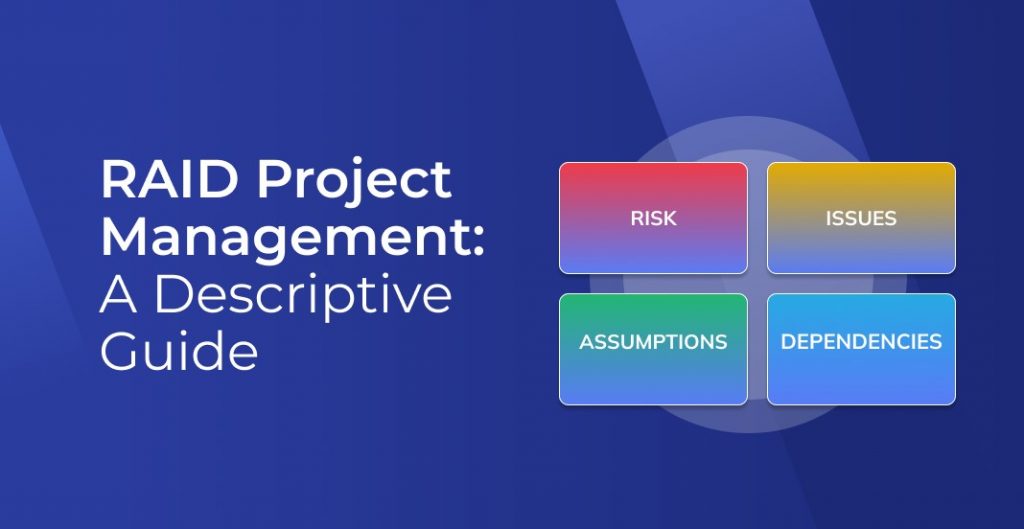
RAID Project Management: A Descriptive Guide

RAID Project Management, Project Management Career, Project Management Skills, Project Management Jobs, Project Management Prep, Project Management Preparation, Project Management Guides, Project Management Tutorial and Materials, Project Management Learning, Project Management RAID

For project managers, recognizing and mitigating risks before embarking on a new project is crucial. A RAID analysis can aid in task allocation and justify decisions made during the project’s lifecycle. Understanding the importance of a RAID log enables you to lead organized assignments in the workplace and assess the effectiveness of your endeavors. This article delves into RAID project management and its importance, outlining its advantages, and guides you through conducting RAID analysis for your upcoming project.

What is RAID Project Management?


RAID Project Management, Project Management Career, Project Management Skills, Project Management Jobs, Project Management Prep, Project Management Preparation, Project Management Guides, Project Management Tutorial and Materials, Project Management Learning, Project Management RAID

RAID Project Management is a structured approach project managers use to identify, assess, and manage key factors that can impact the successful completion of a project. The acronym RAID stands for Risks, Assumptions, Issues, and Dependencies, representing the four categories of factors that are crucial for project managers to monitor and address.

1. Risks: Risks are potential events or situations that could have a negative impact on the project. These could include budget overruns, delays, technical challenges, or changes in market conditions. Identifying and mitigating risks early in the project can prevent major issues later.

2. Assumptions: Assumptions are factors that are considered to be true, real, or certain without any proof or demonstration. Project managers often make assumptions about resources, technologies, or stakeholder behavior. It’s important to recognize these assumptions and validate them to ensure they don’t become sources of problems later in the project.

3. Issues: Issues are problems or challenges that have already occurred and are affecting the project’s progress. These could include conflicts among team members, technical glitches, or delays in the supply chain. Effectively managing issues involves timely resolution and mitigation strategies to minimize their impact on the project timeline and objectives.

4. Dependencies: Dependencies refer to the relationships between tasks or activities within a project. Some tasks can only start or finish when others are completed. Understanding these dependencies is crucial for proper project scheduling and resource allocation. Managing dependencies ensures that tasks are sequenced correctly, preventing bottlenecks and ensuring smooth workflow.

By systematically analyzing and managing these factors, RAID Project Management provides a comprehensive view of potential challenges, enabling project managers to address them proactively. This approach enhances project transparency, reduces uncertainties, and ultimately increases the likelihood of project success.

Why is RAID Analysis is Important in Project Management?


RAID analysis is a critical tool in project management, serving as a structured approach to identify and manage Risks, Assumptions, Issues, and Dependencies within a project. 

Here’s why RAID analysis holds paramount importance in project management:

Risk Mitigation

One of the primary functions of RAID analysis is to identify and assess potential risks in a project. By proactively identifying risks, project managers can develop strategies to mitigate or eliminate them, reducing the likelihood of these risks negatively impacting the project’s success. This risk mitigation approach is critical for avoiding cost overruns, delays, and quality issues.

Assumption Validation

Assumptions are inherent in project planning but can introduce significant uncertainties if validated. RAID analysis encourages project managers to scrutinize and validate assumptions, ensuring they are well-founded. This minimizes the chances of making decisions based on false assumptions, which can lead to project deviations.

Dependency Understanding

Dependencies among project tasks are often complex, and misunderstandings can lead to bottlenecks or inefficiencies. RAID analysis helps project managers understand these dependencies, ensuring that tasks are properly sequenced and resources are allocated efficiently. This leads to smoother project execution.

Improves Communication

RAID analysis enhances communication between the project team and stakeholders. It provides a structured framework for discussing and addressing risks, assumptions, issues, and dependencies. This transparency fosters a shared understanding of potential challenges and solutions, aligning everyone involved with the project’s objectives.

Project Control

Project managers maintain high control over the project’s trajectory by monitoring and managing the elements within a RAID analysis. They can make informed decisions, adapt to changes, and ensure that the project stays on track, meeting its goals and deadlines.

How to Perform RAID Analysis?


RAID Project Management, Project Management Career, Project Management Skills, Project Management Jobs, Project Management Prep, Project Management Preparation, Project Management Guides, Project Management Tutorial and Materials, Project Management Learning, Project Management RAID

Performing a RAID analysis involves a systematic process to identify and manage Risks, Assumptions, Issues, and Dependencies in a project. Here’s a step-by-step guide on how to perform a RAID analysis in project management:

Determine the Importance of the Risks

In a RAID analysis, not all risks are equal. Some might have a minor impact on the project, while others could be catastrophic. It’s crucial to assess and rank risks based on their potential impact on the project’s objectives and their likelihood of occurring. This step involves a careful evaluation of each identified risk to prioritize them. 

High-impact, high-likelihood risks should be prioritized as they pose the most significant threat to the project. Project managers can allocate resources and attention to the most critical areas by determining the importance of risks, ensuring a focused and effective risk management strategy.

Delegate Tasks to Members of the Team

Once risks, assumptions, issues, and dependencies are identified and analyzed, tasks related to mitigating or managing these elements must be assigned. Project managers should delegate specific tasks to team members based on their expertise and skills.

Delegation should be clear and specific, outlining the responsibilities of each team member in addressing the identified items. 

Delegating tasks ensures a structured approach to managing RAID elements and that responsible individuals are accountable for their resolution.

Keep Track of the Occurrence of Issues

Issues are inevitable in any project. It’s essential to closely monitor the identified issues and monitor their progress toward resolution. Regular updates on the status of issues, including any changes or developments, should be tracked.

This ongoing monitoring ensures that issues are managed actively and that the project team takes appropriate actions to resolve them. It also enables quick responses to emerging challenges, preventing them from escalating into larger problems.

Justify the Team’s Decisions

During RAID analysis, the project team might need to make decisions related to risk mitigation strategies, assumption validation methods, issue resolution approaches, and dependency management techniques. These decisions should be well-justified, based on thorough analysis and relevant data. 

Project managers should document and communicate the rationale behind each decision clearly within the team. Justifying decisions fosters understanding and consensus among team members, ensuring everyone is on the same page regarding the chosen course of action.

Create a RAID Log

A RAID log is a structured document that compiles all the information related to Risks, Assumptions, Issues, and Dependencies. It includes detailed descriptions of each item, their impact assessments, the assigned tasks and responsible team members, deadlines, and the status of resolution efforts. 

Creating a RAID log serves as a central repository of critical project information. It provides a clear overview of the project’s potential challenges and its actions to address them. A well-maintained RAID log enhances transparency, accountability, and communication among the project team members and with stakeholders.

How to Create a RAID Document?


Creating a RAID document involves systematically organizing information related to Risks, Assumptions, Issues, and Dependencies in a clear and accessible format. Here’s a step-by-step guide on how to create a RAID document:

Schedule an Audit Meeting

Begin the process by scheduling a meeting with key project stakeholders and team members. This meeting serves as a platform to discuss and collaboratively identify potential Risks, Assumptions, Issues, and Dependencies (RAID). It encourages open communication and allows for diverse perspectives, ensuring a comprehensive assessment of the project’s landscape.

Determine RAID

During the audit meeting, engage in discussions to identify and define Risks, Assumptions, Issues, and Dependencies pertinent to the project. Risks could involve financial uncertainties or technological challenges, while Assumptions might relate to stakeholder behavior or resource availability.

Issues could include ongoing problems, and Dependencies might involve task sequences and interconnections within the project.

Generate a RAID Log

Based on the discussions and identified RAID elements, create a RAID log. This log should be organized, listing each item under its respective category (Risks, Assumptions, Issues, and Dependencies).

Include detailed descriptions, potential impact, priority levels, risk mitigation strategies, validation methods for assumptions, resolution plans for issues, and dependency management approaches. Structuring this information systematically makes it accessible and understandable for all stakeholders.

Share the Information

Distribute the RAID log among the project team members and relevant stakeholders. Transparent communication is vital. Ensure that everyone involved in the project understands the identified RAID elements, their implications, and the strategies devised to address them. Clarity and shared awareness empower the team to work cohesively toward resolving challenges and mitigating risks.

Check the RAID Log for Updates


Regularly update the RAID log to reflect changes in the project environment. New Risks might emerge, Assumptions could be validated or invalidated, Issues may arise or be resolved, and Dependencies might evolve. Schedule periodic reviews and encourage team members to report any new developments promptly. Keeping the RAID log current ensures the project team is equipped with the latest information, enabling agile decision-making and proactive management of project complexities.

Source: invensislearning.com

Friday, 27 October 2023

Project Management Career: A Pathway to Success

Project Management Career: A Pathway to Success

In the fast-paced world of business and industry, effective project management has become the cornerstone of success. As companies strive for excellence, the role of a project manager has gained immense importance. In this article, we will delve into the intriguing realm of project management, exploring its significance, career prospects, and the skills needed to excel in this field.

The Rise of Project Management


Project management is not merely a job title; it's a dynamic field that plays a pivotal role in an organization's success. In a constantly evolving business landscape, the ability to manage projects efficiently has become a sought-after skill. This, in turn, has given rise to a flourishing career path for individuals with the right set of skills.

The Significance of Project Managers


Project managers are the orchestrators of success. They are responsible for planning, executing, and closing projects, ensuring they are completed on time, within budget, and with the desired quality. Their role is to bring together a diverse group of people and resources, align them with a common goal, and drive the project towards successful completion.

Key Skills for a Project Manager


To thrive in a project management career, one must possess a diverse skill set. Here are some essential skills that set outstanding project managers apart:

1. Leadership

Project managers must inspire and lead their teams. They provide direction, set clear goals, and motivate team members to perform at their best.

2. Communication

Effective communication is vital in project management. Project managers must convey ideas clearly, listen actively, and foster open and honest communication within the team.

3. Time Management

Meeting deadlines is a hallmark of successful project management. Time management skills are crucial for ensuring that projects stay on track.

4. Problem-Solving

Projects often encounter unexpected challenges. Project managers must be adept at problem-solving, finding creative solutions to keep the project moving forward.

5. Risk Management

Identifying and mitigating risks is a key responsibility of a project manager. They must anticipate potential issues and have a plan in place to address them.

6. Technical Skills

In today's digital age, project managers need to be tech-savvy. Proficiency in project management software and other relevant tools is a significant advantage.

Career Prospects in Project Management


The demand for skilled project managers is on the rise, and this trend is expected to continue. Whether you are a seasoned professional or just starting your career, the project management field offers numerous opportunities for growth.

Organizations across various industries, from IT to construction, healthcare to marketing, all require project managers to ensure the successful execution of their initiatives. This diversity means that there are endless possibilities for specialization within the field.

Transitioning to a Project Management Career


If you are considering a career in project management, there are several pathways to explore. Many universities and institutions offer project management programs and certifications that can enhance your knowledge and skills. Additionally, gaining practical experience by working on projects, even in a junior role, can be a valuable stepping stone.

Wednesday, 25 October 2023

Unveiling ITIL Guiding Principles: A Roadmap to Operational Excellence

ITIL, ITIL Career, ITIL Skills, ITIL Jobs, ITIL Prep, ITIL Preparation, ITIL Tutorial and Materials, ITIL Learning, ITIL Guides

In the ever-evolving landscape of information technology and service management, one framework has consistently stood the test of time, providing organizations with a structured path to operational excellence - the ITIL (Information Technology Infrastructure Library). Central to ITIL are its guiding principles, a set of best practices that serve as a North Star for businesses seeking to enhance their service delivery, customer satisfaction, and overall efficiency. In this comprehensive guide, we will delve deep into the heart of ITIL and explore these guiding principles that are vital for your organization's success.

The Essence of ITIL


ITIL, a framework developed by AXELOS, is a globally recognized set of practices designed to streamline IT service management (ITSM) and improve IT services. It focuses on aligning IT services with the needs of the business and delivering value to both the organization and its customers.

Understanding the Guiding Principles


At the core of ITIL are seven guiding principles that offer invaluable insights for achieving ITSM excellence. Let's unravel these principles and understand why they are indispensable for your organization.

1. Focus on Value

Value is the cornerstone of ITIL's guiding principles. It emphasizes the importance of understanding what 'value' means to your customers and how IT services can best deliver that value. By keeping the customer's perspective in mind, your organization can make strategic decisions that truly matter.

2. Start Where You Are

"Start where you are" reminds us that change is a journey. Your organization should leverage existing resources and processes, improving them gradually rather than attempting radical overhauls. This principle encourages efficiency, optimization, and sustainable growth.

3. Progress Iteratively

Iterative progress calls for making small, continuous improvements rather than aiming for monumental changes. This principle advocates for regularly assessing your services, learning from each iteration, and adapting your strategies accordingly.

4. Collaborate and Promote Visibility

The power of collaboration cannot be overstated. When IT and business departments collaborate effectively, they promote visibility and transparency. This leads to shared goals, effective communication, and a deeper understanding of how each party contributes to overall success.

5. Think and Work Holistically

Taking a holistic approach means looking at the bigger picture. Consider how various aspects of your IT services and business operations are interconnected. This principle helps in avoiding siloed thinking and encourages comprehensive, cohesive solutions.

6. Keep It Simple and Practical

"Simplicity is the ultimate sophistication," as Leonardo da Vinci once said. By keeping it simple and practical, you reduce the risk of complexity, making it easier for your team to understand, implement, and manage your IT services efficiently.

7. Opt for Automation Where Possible

In today's fast-paced IT landscape, automation is a game-changer. Leveraging automation where possible can lead to increased efficiency, reduced human error, and enhanced service quality. It's about finding the balance between manual and automated processes.

Why ITIL Guiding Principles Matter


The significance of ITIL's guiding principles extends beyond mere theory. They offer practical, real-world benefits to organizations of all sizes and across various industries:

Improved Customer Satisfaction

By aligning your services with customer needs and continuously improving, you naturally enhance customer satisfaction. Happy customers are more likely to be loyal customers.

Streamlined Operations

ITIL principles encourage you to optimize your processes and work holistically. This leads to reduced operational bottlenecks and smoother workflows.

Cost Efficiency

Through iterative progress and the simplification of processes, you can identify cost-saving opportunities and improve the financial health of your organization.

Enhanced Competitiveness

ITIL principles enable you to adapt to changing market conditions swiftly. This adaptability can give your organization a competitive edge in today's rapidly evolving business landscape.

Sustainable Growth

Starting where you are and making incremental changes promotes sustainable growth without risking operational disruptions.

Final Thoughts


In the world of IT service management, the ITIL guiding principles act as beacons, illuminating the path to success. By implementing these principles, your organization can consistently deliver value to your customers, optimize operations, and stay ahead in the highly competitive IT landscape.

So, as you embark on your ITSM journey, remember the essence of ITIL - focus on value, start where you are, progress iteratively, collaborate, think holistically, keep it simple, and embrace automation. These guiding principles will not only transform your IT services but also position your organization for a future of operational excellence.

Monday, 23 October 2023

Unlocking Success: Navigating Your ITIL Career

Unlocking Success: Navigating Your ITIL Career

In today's digital age, the Information Technology Infrastructure Library (ITIL) plays a pivotal role in the efficient management of IT services. ITIL is a set of best practices that ensures that IT services are aligned with the needs of businesses. In this comprehensive guide, we will delve into the world of ITIL, its significance in the corporate world, and how you can propel your ITIL career to new heights.

The Foundation of ITIL

What is ITIL?

ITIL stands for Information Technology Infrastructure Library, and it serves as a framework of best practices for IT service management. It was developed by the United Kingdom's Office of Government Commerce (OGC) and has evolved into a global standard for IT service management.

The Pillars of ITIL

1. Service Strategy

Service strategy is the first step in ITIL. It involves understanding your business objectives and customer needs, and then devising a strategy to meet them. Successful implementation of service strategy can lead to enhanced customer satisfaction and financial gains for your organization.

2. Service Design

Service design encompasses the planning and design of IT services. It ensures that the services are efficient, cost-effective, and meet the business needs. Effective service design is essential for delivering high-quality IT services.

3. Service Transition

Service transition focuses on the smooth transition of services from development to production. It minimizes disruption to the business while introducing new or modified services, ensuring that the changes are implemented with minimal risk.

4. Service Operation

Service operation is the day-to-day management of IT services. It involves activities such as incident management, problem management, and continuous service improvement. This stage ensures the services are delivered efficiently and effectively.

5. Continual Service Improvement

Continual service improvement is all about optimizing IT services over time. It involves regular assessments, reviews, and adjustments to ensure that services align with changing business needs and industry trends.

The Significance of ITIL in the Corporate World

In today's fiercely competitive business landscape, ITIL is not just a buzzword; it's a necessity. Here's why ITIL is so crucial for organizations:

Improved Service Quality

By implementing ITIL practices, organizations can provide more reliable and efficient services to their customers. This results in higher customer satisfaction and improved reputation.

Cost Efficiency

ITIL helps in optimizing IT processes, leading to cost reductions. Through better resource allocation and streamlined processes, organizations can maximize their ROI.

Enhanced Collaboration

ITIL promotes collaboration and communication between different departments within an organization. This not only improves service delivery but also fosters a culture of teamwork.

Regulatory Compliance

In an increasingly regulated environment, ITIL helps organizations adhere to compliance requirements. It ensures that data and services are handled in a secure and compliant manner.

Advancing Your ITIL Career

Now that you understand the significance of ITIL in the corporate world, let's discuss how you can advance your ITIL career:

1. Certifications

Earning ITIL certifications is a surefire way to enhance your career prospects. Start with the ITIL Foundation certification and progress to more advanced levels. These certifications not only boost your knowledge but also demonstrate your commitment to ITIL best practices.

2. Continuous Learning

ITIL is a dynamic field, and staying updated is crucial. Read books, attend webinars, and participate in ITIL user groups to expand your knowledge and network with like-minded professionals.

3. Hands-On Experience

Practical experience is invaluable. Work on real-world ITIL projects to apply your knowledge and gain practical insights into IT service management.

4. Soft Skills

In addition to technical expertise, soft skills such as communication, leadership, and problem-solving are essential. They will set you apart in the competitive job market.

5. Networking

Build a strong professional network by connecting with ITIL practitioners, attending industry conferences, and engaging in online forums. Networking can open doors to new opportunities and collaborations.

Conclusion

ITIL is the backbone of efficient IT service management, and it plays a critical role in achieving business goals. To thrive in your ITIL career, focus on certifications, continuous learning, practical experience, soft skills, and networking. By embracing these principles, you can unlock the doors to a successful and fulfilling ITIL career.

Friday, 20 October 2023

Mastering the ISQI Exam: Your Gateway to Success

ISQI Exam, ISQI Career, ISQI Skills, ISQI Jobs, ISQI Prep, ISQI Preparation, ISQI Tutorial and Material, ISQI Guides

In the dynamic world of IT certifications, the ISQI Exam stands as a significant milestone for those looking to excel in the field of software quality assurance. This article serves as your comprehensive guide to not only understand the importance of the ISQI Exam but also to provide valuable insights on how to excel in it. We, at Processnews, are committed to helping you navigate the intricate landscape of this examination, ensuring your success and opening doors to new career opportunities.

Understanding the ISQI Exam


The ISQI Exam, offered by the International Software Quality Institute (ISQI), is a globally recognized certification program tailored for professionals in the software quality assurance domain. This exam is designed to assess an individual's knowledge, skills, and expertise in software testing, quality management, and related areas. Achieving this certification not only validates your proficiency but also enhances your career prospects, making you a sought-after asset in the ever-evolving IT industry.

The Significance of ISQI Certification


Obtaining an ISQI certification carries immense weight and is highly regarded within the IT community. Here's why it matters:

1. Industry Recognition

ISQI has established itself as a global leader in software quality certification. When you earn an ISQI certification, you're joining a prestigious community of professionals, and your skills are acknowledged worldwide.

2. Career Advancement

With an ISQI certification, you'll find numerous doors open to you. Whether you're aiming for a promotion or looking to explore new career opportunities, this certification will set you apart from the competition.

3. Skill Enhancement

The ISQI Exam isn't just about gaining a certification; it's a journey of continuous learning and skill development. The knowledge you gain during your preparation is invaluable and will serve you well throughout your career.

4. Quality Assurance Expertise

The ISQI Exam focuses on various aspects of quality assurance, including software testing, quality management, and process improvement. By earning this certification, you're demonstrating your expertise in these critical areas.

Preparing for the ISQI Exam


Success in the ISQI Exam requires careful preparation and a strategic approach. Here are the steps to ensure you're fully equipped for the challenge:

1. Understand the Exam Structure

Begin by familiarizing yourself with the exam's structure. Know the number of questions, the duration, and the passing score required. This information will help you plan your study schedule effectively.

2. Study Materials

Invest in high-quality study materials. Enroll in an ISQI-authorized training course or obtain official study guides and practice exams. These resources are designed to align with the exam's content and can significantly enhance your knowledge.

3. Practice, Practice, Practice

Practice is the key to success. Regularly attempt practice exams to gauge your progress. These mock tests will help you identify areas where you need improvement and boost your confidence.

4. Join a Study Group

Consider joining a study group or an online forum where you can discuss challenging topics with fellow candidates. Collaboration and knowledge sharing can be incredibly beneficial.

5. Time Management

Develop a study schedule that accounts for all the topics and ensures you have ample time for revision. Effective time management is crucial for mastering the material.

6. Take Care of Yourself

Don't neglect your physical and mental well-being. Ensure you get adequate rest, eat healthily, and manage stress effectively. A clear mind and a healthy body will aid in your preparation.

The Exam Day


When the day of the ISQI Exam arrives, it's crucial to remain calm and focused. Here are some last-minute tips to ensure success:

1. Arrive Early

Arriving early at the exam center will help you settle in and reduce pre-exam anxiety.

2. Read Instructions Carefully

Before you begin, read all instructions carefully. Ensure you understand the rules and guidelines for the exam.

3. Time Management

Keep an eye on the clock. Allocate a specific amount of time to each question and stick to your schedule to complete the exam on time.

4. Stay Calm

Don't let difficult questions fluster you. If you come across a challenging one, move on and return to it later. Maintaining composure is essential.

After the Exam


Once you've completed the ISQI Exam, you'll be eager to know your results. While waiting, it's a good idea to reflect on your performance and plan your next steps.

1. Review Your Exam

Take some time to review the exam, noting the questions you found challenging and any areas you need to improve.

2. Stay Informed

While waiting for your results, stay informed about the latest developments in the field of software quality assurance. Continuous learning is essential for long-term success.

3. Celebrate Your Achievements

Regardless of the outcome, celebrate your dedication and hard work. Earning an ISQI certification is a significant achievement.

Conclusion

In conclusion, the ISQI Exam is your gateway to a successful career in software quality assurance. We hope this article has provided you with a comprehensive understanding of the significance of ISQI certification and valuable insights on how to excel in the exam. Remember that success in the ISQI Exam is not just about passing a test; it's about gaining expertise and opening doors to new opportunities in the IT industry.