Saturday, 22 September 2018

Distinction between ITIL and PMBOK

ITIL Certification, PMBOK, PMI Certifications, ITIL Study Materials, ITIL Guides, ITIL and ITSM

ITIL (formerly an acronym for Information Technology Infrastructure Library) is a set of detailed practices for IT service management (ITSM) that focuses on aligning IT services with the needs of business. In its current form (known as ITIL 2011), ITIL is published as a series of five core volumes, each of which covers a different ITSM lifecycle stage. Although ITIL underpins ISO/IEC 20000 (previously BS 15000), the International Service Management Standard for IT service management, there are some differences between the ISO 20000 standard, ICT Standard by IFGICT and the ITIL framework.

ITIL describes processes, procedures, tasks, and checklists which are not organization-specific or technology-specific, but can be applied by an organization for establishing integration with the organization's strategy, delivering value, and maintaining a minimum level of competency. It allows the organization to establish a baseline from which it can plan, implement, and measure. It is used to demonstrate compliance and to measure improvement. There is no formal independent third party compliance assessment available for ITIL compliance in an organisation. Certification in ITIL is only available to individuals and relates to their knowledge of the five books.

The Project Management Body of Knowledge is a set of standard terminology and guidelines (a body of knowledge) for project management. The body of knowledge evolves over time and is presented in A Guide to the Project Management Body of Knowledge (the Guide to the PMBOK or the Guide), a book whose sixth edition was released in 2017. The Guide is a document resulting from work overseen by the Project Management Institute (PMI), which offers the CAPM and PMP certifications.

Much of the PMBOK Guide is unique to project management e.g. critical path method and work breakdown structure (WBS). The PMBOK Guide also overlaps with general management regarding planning, organising, staffing, executing and controlling the operations of an organisation.

Distinction between ITIL and PMBOK


ITIL PMBOK 
ITIL is focused on Service Delivery and Service Level Management. The PMBOK Guide is process-based, meaning it describes work as being accomplished by processes 
ITIL advocates that IT services must be aligned to the needs of the business and underpin the core business processes. It provides guidance guidance to organizations on how to use IT as a tool to facilitate business change, transformation and growth. The Project Management Body of Knowledge (PMBOK) is a collection of processes and knowledge areas generally accepted as best practice within the project management discipline. As an internationally recognised standard (IEEE Std 1490-2003) it provides the fundamentals of project management, irrespective of the type of project be it construction software, engineering, automotive etc 
ITIL Version 3 framework defines five phases of IT Service Management Lifecycle. These are part of the ITIL Version 3 Core publications. They are:

Service Stategy
Service Design
Service Transition
Service Operation
Continual Service Improvement
PMBOK recognises 5 basic process groups and 9 knowledge areas typical of
almost all projects. The basic concepts are applicable to projects, programs and operations. The five basic process groups are:The five basic process groups are:

1. Initiating

2. Planning

3. Executing

4. Monitoring and Controlling

5. Closing
There are mainly four IT functions as per the
ITIL Version 3 framework. They are:

Service Desk
IT Operations Management function


Processes overlap and interact throughout a project or phase. Processes are described in terms of: Inputs (documents, plans, designs, etc.), Tools and Techniques (mechanisms applied to inputs) & Outputs (documents, products, etc.). The nine knowledge areas are:

1. Project Integration Management

2. Project Scope Management

3. Project Time Management

4. Project Cost Management

5. Project Quality Management
Application Management Function
Technical Management Function
6. Project Human Resource Management

7. Project Communications Management

8. Project Risk Management

9. Project Procurement Management
ITIL describes the ideal end state that an organisation would like to achieve. Much of PMBOK is unique to project management e.g. critical path and work breakdown structure (WBS). 
ITIL focuses on the lifecycle of services. PMBOK focuses on the lifecycle of projects. 
The decision as to undertake a project will be made as a result of ITIL Service Strategy and Service Design The project team may then use PMBOK best practices for accomplishing the goal, objective or output identified during Strategy and Design 
ITIL is specific to IT only. PMBOK project management can be applied to any domain, such as Civil Engineering Construction or Public Sector or IT 
ITIL addresses how IT organisations as a whole should operate. PMP addresses how individual projects within the organisation should be executed. 
By taking a larger view of services in the organisation as a whole via a lifecycle approach, ITIL sets out to examine service strategy, service design, service transition, service operation, and continual service improvement. PMP applies to projects throughout the entire organisation not just IT. The PMP framework, focusing on effective execution of projects, can be applied to any area of any organisation 
Take, for example, an organisation that is building and deploying an email service – on one level, ITIL will evaluate what is needed. PMP will then take this information and further break it down into easier-to-manage increments.
ITIL provides a Body of Knowledge for managing IT Operations which are repetitive in nature. PMBOK provides a Body of Knowledge (BOK) for managing Projects which are a “temporary endeavor” in general 
ITIL Version 3 has 23 processes and 4 IT functions The latest PMBOK 4th edition has totally 42 processes for the Project Management Body of Knowledge
The UK Office of Government Commerce (OGC) is responsible for the management and distribution of materials on the ITIL framework In the US, the Project Management Institute manages the PMP certification. The PMP certification is based on content contained in the Project Management Body of Knowledge (PMBOK), a book published by the PMI

Thursday, 20 September 2018

Prince2 Processes

A process is a structured set of activities designed to accomplish a specific objective. PRINCE2 has activities for Starting Up a Project, running a project, and many others. It groups these into processes.

PRINCE2 is a process-based approach for project management. There are 7 processes that guide you through the project, and each provides a set of activities. These activities help to direct, manage and deliver a project, and are described in the PRINCE2 manual. Like any process, a PRINCE2 process takes one or more inputs, acts on them, and provides defined outputs.

The 7 PRINCE2 process are:

◈ Starting Up a Project (SU)
◈ Initiating a Project (IP)
◈ Directing a Project (DP)
◈ Controlling a Stage CS)
◈ Managing Product Delivery (MP)
◈ Managing a Stage Boundary (SB)
◈ Closing a Project (CP)

1. An Overview of the Processes


As mentioned earlier, there are seven management processes in PRINCE2. Each process is the responsibility of one of the management levels in the project organization, meaning the Project Board, Project Manager or Team Manager.

1.1 Directing a Project Process

Directing a Project is the responsibility of the Project Board. It runs from the start of the project until its end. Note that the Starting Up a Project process happens before the project starts. During this Directing a Project process, the Project Board authorizes project stages and manages the overall project by using the management style Management by Exception.

1.2 The Starting Up a Project Process

This is the responsibility of both the Project Manager and the Executive. This is the very first process and is, in fact, known as the Pre-Project process, referring to the fact that it occurs before the project starts, as the project does not start until the Initiation Stage begins. In this process, the reasons for the project are established, the project management team is assigned, and a Stage Plan is created to run the Initiation Stage.

1.3 The Initiating a Project Process

The Initiating a Project process is the process that defines the Project Product, product quality, project timeline and costs, risk analysis, and commitment of resources, and assembles the PID (Project Initiation Documentation). This is also the process where the Project Plan is created and the Business Case for the project is finalized.

1.4 The Controlling a Stage Process

The Controlling a Stage process is where the Project Manager does most of his work. The Project Manager watches over the work, takes corrective action, observes changes, and communicates with stakeholders, which includes reporting. Each action can be repeated many times by the Project Manager until the stage is complete. The project is divided into stages for management and control efficiency. The Controlling a Stage process monitors each stage and is repeated for each stage in the project.

1.5 The Managing Product Delivery Process

Managing Product Delivery is the process where the planned products are created and it comes under the responsibility of the Team Manager. It is where the Work Packages are executed, the products get created, and work gets done. The Team Manager receives the Work Packages (which are a list of tasks) from the Project Manager, and delivers the completed and tested Work Packages back to the Project Manager.

1.6 The Managing a Stage Boundary Process

The Managing a Stage Boundary process has two main functions: (1) reporting on the performance of the existing stage and (2) planning the next stage. Therefore, the Project Board can check on how well the stage has done against the Stage Plan. In other words, this process evaluates the stage and prepares the plan for the next stage. The End Stage Report and Next Stage Plan are submitted to the Project Board.

1.7 The Closing a Project Process

The Closing a Project process covers the work of wrapping up the project and this process is the last part of the last stage. PRINCE2 suggests a number of activities to be done to prepare the project for closure, such as End Project Report, Lessons Learned Report and Acceptance Record.

The output of this process will be the basis for the Project Board’s confirmation for closure, as the project is closed by the Project Board in the Directing a Project process and not by the Project Manager.

2. Project Lifecycle


The following is a quick overview of the project lifecycle; the way processes are run through the management stages. The following figure summarizes the information.

2.1 Pre-Project

What happens before the project starts? This is known as Pre-Project (project has not started yet).

Someone, somewhere, at sometime has an idea or a need. This can be a business opportunity or something that is necessary to do for the company (e.g., a change in legislation like a CO2 reduction). This idea or need is the trigger for the project.

Prince2 Processes, Prince2 Certification, Prince2 Tutorial and Material, Prince2 Study Material

The first step that is normally taken is the creation of a project mandate document. This is why we say that the project mandate is the Trigger for the project. A project mandate can be a simple one-page note, an email, or a structured document based on a company project mandate template.

There are a number of Pre-Project activities to be done and these are referred to as the project start-up. PRINCE2 suggests a number of pre-project activities that should be done.

The main objective of the Starting Up a Project process is to verify that the project is worthwhile. The project mandate is expanded to a Project Brief, and a plan is created for the Initiation stage. The Starting Up a Project process is also about preventing poor projects from starting.

After this process is complete, The Project Board reviews the Project Brief and decides whether to initiate the project. This is the first decision that the Project Board takes.

2.2 Initiation Stage

This is the first Stage in a project and the activities to be performed for project initiation are contained in the Initiating a Project process. The main objectives of the Initiation Stage are to:

◈ Define the Project Product quality, project timeline, costs, risk analysis and commitment of resources, and then assemble the Project Initiation Documentation (PID). The PID contains almost all of the project information to date, including the Project Plan.
◈ Create a detailed Business Case, document the benefits and prepare a Benefits Review Plan that will describe how and when Benefits will be reviewed.
◈ The Project Plan is a high-level plan for the whole project. A Stage Plan is also created for the first delivery Stage Plan (in the Stage Boundary process), which is a lot more detailed.

At the end of the Initiation Stage, the Project Board will receive the PID and decide whether to authorize the project or not. In simple terms, this means that the Project Board will decide (Yes or No) to allow the project to start. If yes, the PID is baselined so it can be used in the future to compare the project objectives with the current situation.

Prince2 Processes, Prince2 Certification, Prince2 Tutorial and Material, Prince2 Study Material

2.3 Next Stage or Stages after the Initiation Stage

The Project Manager has day-to-day responsibility for the project on a stage-by-stage basis, and reports to the Project Board. The Project Manager does the following:

◈ Assigns work to be done (assigns work to the Team Managers).
◈ Checks that all deliverables have passed the required quality tests.
◈ Checks that stage is in line with Stage Plan.
◈ Checks that forecasts are within project tolerances.
◈ All these activities are done in the Controlling a Stage process.

At the same time the Project Manager maintains a number of documents, such as the Daily Log, Lessons Log, Issue Register, Risk Register, Quality Register and Configuration Items Record.

The Project Manager keeps the Project Board up to date about the progress of the project using the Highlight Report. For example, the Project Board may have agreed to receive a Highlight Report every two weeks from the Project Manager.

Prince2 Processes, Prince2 Certification, Prince2 Tutorial and Material, Prince2 Study Material

Work Packages are produced in the Managing Products Delivery process, and the Checkpoint Reports are used to keep the Project Manager up to date on a regular basis.

Towards the end of a stage in the Managing a Stage Boundary process, the Project Manager will request permission to proceed to the next stage and will have to provide the following information to the Project Board: Updated Business Case, End Stage Report, and Next Stage Plan.

The Project Board will use the information provided by the Project Manager to assess the continued viability of the project and will make the decision to authorize the next stage.

2.4 Final Delivery Stage

During the final stage, the Project Manager will be accepting and getting approval for the last products to be produced, and will focus on decommissioning the project.

The Project Board will check that the recipients of the project's products are in a position to own and use them, and will also check that they will be supported after the project has stopped.

The Closing a Project process is always the last part of the last stage and it describes a number of activities that should be done, such as:

◈ Assessing the project by comparing it to the original plan
◈ Writing End Project Report
◈ Planning post-project benefits reviews
◈ Writing and delivering Lessons Learned Report

Prince2 Processes, Prince2 Certification, Prince2 Tutorial and Material, Prince2 Study Material

The Project Board will revise the data provided by the Project Manager and then can take the decision to Authorize Project Closure. The Project Manager can then leave the building.

Tuesday, 18 September 2018

ITIL - Service Strategy Overview

Service Strategy helps to design, develop and implement service management as organizational capabilities and strategic assets as well. It enables a service provider to consistently outperform competitive alternatives over time, across business cycles, industry disruptions and changes in leadership.

ITIL Tutorial and Material, ITIL Study Material, ITIL Certification, ITIL Guides

Service strategy comprises of the following key concepts −

◈ Value creation
◈ Service Assets
◈ Service Provider types
◈ Service structures
◈ Defining the service market
◈ Developing service offerings
◈ Financial management
◈ Service portfolios
◈ Demand management
◈ Return on investment

Strategic Assessment


Before crafting service strategy, a provider should first take a careful look at what it does already.The following questions can help expose a service provider’s distinctive capabilities −

◈ Which or our services or service verities are the most distinctive?

◈ Which or our services or service verities are the most profitable?

◈ Which of our activities in our value chain or value network are the most different and effective?

Factors in Strategic Assessment


Here are the key factors that play important role in strategic assessment −

Sr.No. Description
1 Strengths and weaknesses

The attributes of the organization. For example resources and capabilities, service quality, skills, cost structures, product knowledge, customer relationship etc.
2 Business Strategy

The perspective, position, plans and patterns are received from a business strategy.
3 Critical Success factors

How will the service provider know when it is successful?
4 Threats and opportunities

Includes competitive thinking. For example, is the service provider vulnerable to substitution?, or Is there a means to outperform competing alternatives?

Value Creation


Service strategy defines a unique approach for delivering better value. According to customers service consist of two elements −

◈ Utility
◈ Warranty

Utility

Utility is perceived by the customer from the attributes of the service that have positive effect on the performance of task associated with the desired business outcomes. This is fir for purpose.

Utility is generally stated in terms of −

◈ Outcomes supported
◈ Ownership costs and risks avoided

Warranty

Warranty ensures the utility of the service is available as needed with sufficient capacity, continuity, and security. Value of warranty is communicated in terms of level of certainty.

Warranty is usually defined in terms of availability, capacity, continuity, and security of the utilization of the services.

Availability

It assures the customer that the services will be available for use under agreed terms and conditions.

Capacity

It assures that the service will support a specified level of business activity or demand at a specified level.

Continuity

It assures that the service will continue to support the business through major failures.

Security

It assures that the service provided by the service provider will be secure.

Service Assets


There are two types of service assets as listed below −

◈ Resources
◈ Capabilities

Resources

Resources are the inputs for production. The resources are transformed by management, organization, people and knowledge.

Capabilities

Capabilities refer to skills to develop and control the resources for production. The skills are based on knowledge, experience and information.

ITIL Tutorial and Material, ITIL Study Material, ITIL Certification, ITIL Guides

Service Provider Types


Service Provider can be broadly classified into three types as listed below −

Type I – Internal Service Provider
Type II – Shared Service Provider
Type III – External Service Provider

Type I Internal Service Provider

Internal Service provider refers to the business functions within an organization. Administration, finance, human resources, and IT service providers all comes under internal service providers.

Type II Shared Service Provider

In this, business functions such as IT, human resources, and logistics are consolidated into an autonomous special unit called a Shared Service Unit (SSU).

Type III External Service Provider

External service provider refers to the third party service providers. It can offer competitive prices and drive down unit cost by consolidating demand.

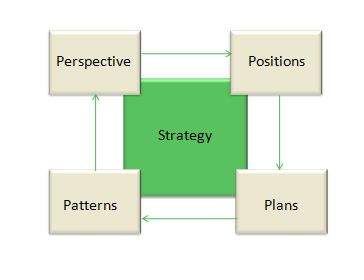
The Four Ps of strategy


The below mentioned Four Ps identify the different forms of a service strategy and are considered as entry points to service strategy.

ITIL Tutorial and Material, ITIL Study Material, ITIL Certification, ITIL Guides

1. Perspective

It describes a vision & direction and articulates the business philosophy of interacting with customer.

2. Positions

It describes the decision to adopt a well defined stance. It is expressed as distinctiveness in minds of customers. This means competing in the same space as others but with differentiated value proposition that is attractive to the customer. Whether it is about offering a wide range of services to a particular type of customer or being the lowest cost option, it is a strategic position.

3. Plan

A plan describes "How do we offer high value or low cost services?" or "How do we achieve and offer our specialized services?"

4. Pattern

It describes the organization’s fundamental way of doing things.

Services strategy processes


The following diagram expresses the different processes and their relationship in service strategy −

ITIL Tutorial and Material, ITIL Study Material, ITIL Certification, ITIL Guides

Strategy Management

This process involves four activities − definition of market, development of offering, development of strategic assets, and preparation for the implementation of the strategy.

Service Portfolio Management

Service portfolio defines all services that a service provider can provide. It helps to control service management investments throughout an enterprise and actively managing their value.

Business Relationship Management

This process deals with establishing good relationship between service provider and customers by ensuring that appropriate services are developed to meet customer’s needs.

Demand Management

This process maintains balance between consumption of services and their delivery.

Financial Management

Financial management helps to determine all the costs of IT organization. It can serve as a strategic tool for all three kinds on service provider types − internal, external and shared service provider.

Saturday, 15 September 2018

Project Management vs Program Management vs Portfolio Management

Project Management,  Program Management, Portfolio Management

These are very important topics from a PMP exam point of view and you are going to see some questions on these topics in your exam; therefore, make sure you understand these topics well.

Okay, let’s get started.

Project


“A project is a temporary endeavor undertaken to create a unique product, service or result.”

So, you can say that a project is temporary in nature, i.e. once the project achieves its objective its existence comes to an end, and the objective of a project is to create a unique product, or develop a system to provide you any service, or is the result of any task.

For example, let’s say that you have been given a project to set up a call center for a company that they can use to provide support service to their customers. You start the project, set up the call centre, and hand it over to your client. Now your client is ready to provide support service to their clients.

It is not necessary for your team members to be located in one place; sometimes your project team may include members located outside your geographic location.

Please note that once you hand over the end product to the client, your project will be completed and you will close the project. Moreover, since the nature of the project is temporary, your project team members will be separated once the project is completed.

Project Management


Project management is the process that helps projects achieve their objectives. These processes include initiating the project, developing the plan to execute the project, executing the project according to the approved plan, controlling the project activities throughout its lifetime, and finally handing over the output of the project to the client, and closing the project.

Simply put, project management is the application of knowledge, skills, tools, and techniques to project activities to meet the project requirements.

Program


A program is a group of related or similar projects managed in a coordinated way to get the benefits and control not available from managing them individually. This means that in a program you will have multiple projects which are either similar or related to each other.

For example, let’s say that you have two projects: the first project is to construct a school building and the second project is to construct an office building. Since these two projects are similar in nature, you will keep them under a program.

Program Management

Program management is defined as the centralized coordinated management of a program to achieve its strategic objectives. In program management, you only manage the interrelated or interdependent projects as a group to achieve the desired result.

The objective of program management is to optimize the utilization of resources among projects and reduce the friction or constraints so as to increase the organization’s performance.

The Difference between Project Management and Program Management

The following are a few differences between project management and program management:

◈ In project management, you manage one individual project while in program management you manage multiple similar or related projects.
◈ A project can be a part of a program but a program cannot be a part of a project.
◈ Program management addresses the management of project management. It helps you set the project management processes and measure the project results.

The Benefits of Program Management

The following are a few benefits of program management:

◈ Less conflict among projects
◈ Optimal utilization of resources
◈ Resource constraints are minimized
◈ Better communication and coordination among projects
◈ Improves organization’s performance


Portfolio


Portfolio refers to a group of related or non-related projects or programs. A portfolio can consist of multiple programs or multiple projects without having a single program. A portfolio can have multiple non-similar projects without having a program, because two or more non-related projects will be managed under portfolio management. Conversely, in program management only related projects are managed.

For example, let’s say that you have three projects: the first project is to construct a building, the second project is to conduct research to find the impact of motor pollution on the environment, and the third project is to set up a call center.

How you are going to manage these projects?

You will manage these projects by keeping them under a portfolio, because all three projects are neither related nor similar to each other.

Portfolio Management

Portfolio management has a bigger scope and objective than program management.

In portfolio management, there is a centralized management whose job is to identify, prioritize, and authorize the projects or programs. This centralized management controls and manages the projects or programs to achieve the organization’s strategic business objectives.

Please note that, although portfolio management sets the priority of the projects or programs in a group, it does not oversee any individual project or program.

The Difference between Portfolio Management and Program Management

The following are a few differences between portfolio management and program management:

◈ In program management, you manage similar projects, while in portfolio management you manage non-similar projects or different programs.
◈ The scope for program management is larger than the project scope, and the portfolio has an organization-wide scope which changes with the strategic objectives of the organization.

The Benefits of Portfolio Management

The following are a few benefits of portfolio management:

◈ Optimal allocation and utilization of resources among projects or programs
◈ Provide constant support to projects or programs
◈ Fewer conflicts and better communication among projects or programs
◈ Better coordination among projects or programs

Wednesday, 12 September 2018

Best Practices in Project Portfolio Management

Maintaining competitive advantage in a world of rapid change and constant disruption is vital to organizational success. Mature portfolio management practices are needed to drive innovation while remaining aligned with strategic goals.

Project Portfolio Management, PMI Study Materials, PMI Guides, PMI Certifications

But who is responsible for initiating tomorrow’s projects today?

Project portfolio managers and leaders are needed to bridge the gap between strategy and implementation. By organizing a series of key projects and initiatives into a single portfolio, business professionals can streamline data collection, evaluation techniques and the projected level of risk and its impact on the overall portfolio and the business.

By utilizing project portfolio best practices, these leaders can centralize management of all projects and align them with the company’s strategic objectives.

What is Project Portfolio Management?


Project portfolio management (PPM) is a process that allows organizations and leaders to see the big picture by analyzing the entire portfolio and its potential impact on the organization.

When implemented, project portfolio managers should be able to successfully understand the projected return on investment and all details related to the project including risks, budgets, resources, tasks, timelines and goals.

Not only is proper management needed to help grow the organization, but poor project management can cost companies millions. According to the 2017 Study Pulse of Profession, organizations waste an average of $97 million for every $1 billion invested.

Implementing best practices can help managers stay on track and stay ahead of any issues that could cost the company time, money and resources.

Project Portfolio Management Best Practices


Identify Organizational Goals and Overall Business Strategy


Understanding your company’s goals and strategy will provide a clear understanding of what the project portfolio should achieve and will ultimately help you develop an action plan. Common pitfalls occur when a project is rolled out without a business case.

Organize Project Distribution


Managers and leaders should prioritize projects according to the company’s top concerns. For example, if your organization’s main focus is on leveraging technology to enhance customer experience, projects related to that goal should be shuffled to the top of the list and be cohesive within the portfolio.

Clarify the Scope and Mission


To ensure business alignment, map out project requirements, objectives and scope during the concept phase of a project’s life cycle. Be sure to also clarify project owners and document all facets of individual projects and the project portfolio including deliverables, standards of performance and limitations.

Create Clear Evaluation Criteria


Developing specific project evaluation criteria will ensure your organization can easily review, evaluate and authorize projects. Questions that may help in developing some clear, universal criteria include:

◈ How does this project drive business goals?
◈ What is the expected tangible outcome?
◈ Can this be achieved by a project already in motion?
◈ What resources are needed to complete this project?
◈ What are the risks associated with this project?

Develop Risk Management Strategy


As a project portfolio manager, creating a risk-return profile will provide organizational leaders with the information needed for consideration of risk as well as the reward of a project portfolio. Risks need to be identified, assessed and managed in relation to the overall portfolio, not just in comparison of projects side by side.

Monday, 10 September 2018

Top 12 Project Management Certifications for 2018

Career, All Certifications 2018, Certification Guides

Top project management certifications

1. PMP: Project Management Professional


The gold standard in project management certifications, the Project Management Professional certification is a rigorous test that covers absolutely everything you need to prove your knowledge and skill in managing the "triple constraints": time, cost and scope. The Project Management Institute (PMI) is this credential's parent organization, and works continuously with businesses and academia to ensure relevance for the certification.

Organization: Project Management Institute

Price: Computer based exams are $405 for PMI members; $555 for non-members. Paper-based exams are $250 for PMI members; $400 for non-members.

Requirements: Four-year secondary degree plus three years of project management experience, 4,500 hours leading and directing projects, and 35 hours project management education OR a high-school diploma, five years of project management experience, 7,500 hours leading and directing projects, and 35 hours of project management education.

2. CAPM: Certified Associate in Project Management


The Certified Associate in Project Management is the precursor to the PMP certification and is also administered by the PMI. For professionals without a college degree, or with only rudimentary project management experience or those who want to achieve their PMP certification in steps rather than all at once, the CAPM is a stepping-stone to the more rigorous PMP.

Organization: Project Management Institute

Price: $225 for PMI members; $300 nonmembers

Requirements: High-school diploma, associates degree or equivalent and at least 1,500 hours of project management experience OR 23 hours of project management education.

3. CSM: Certified ScrumMaster


The use of agile methodologies has become the standard in IT organizations, so it's not surprising that IT practitioners uniquely qualified to manage projects in agile environments are in high demand. While there are different Scrum master certifications available, the Certified ScrumMaster (CSM) from Scrum Alliance is a great jumping-off point for project managers getting started as Scrum practitioners. The Scrum Alliance, the parent organization for this credential, is a nonprofit organization that encourages the adoption of scrum and agile practices, promotes user groups and learning events, and provides resources for professional development. The organization boasts more than 450,000 certified practitioners worldwide.

Organization: The Scrum Alliance

Price: ScrumMaster training course cost varies by training provider, but is approximately $995 to $1,395

Requirements: General familiarity with scrum; completion of a two-day Certified ScrumMaster training course.

4. CompTIA Project+ certification


This entry-level certification is roughly on par with PMI's CAPM credential, though the requirements are less stringent. CompTIA's Project+ solicits feedback from the entire computing industry, government representatives, research institutions, academia and independent experts to design the certification.

Organization: CompTIA

Price: $285

Requirements: One year of experience managing, directing or participating in small- to medium-sized projects is recommended.

5. PRINCE2 Foundation/PRINCE2 Practitioner


Projects in Controlled Environments (PRINCE2) is most well-known overseas, especially in the U.K. and its government entities. The PRINCE2 certifications are delivered by the ILX Group and focus on directing, managing and delivering projects across all phases, pre-project, initiation, delivery and final delivery.

There are two primary qualifications, PRINCE2 Foundation and PRINCE2 Practitioner. The Foundation certification is an entry-level credential that tests basic project management terminology and methodology, while the Practitioner certification tests advanced project managers who have already achieved PRINCE2 Foundation.

Organization: ILX Group

Price: Foundation: $200; Practitioner: $340

Requirements: PRINCE2 Foundation requires a PRINCE2 Foundation course; PRINCE2 Practitioner requires one of the following: PRINCE2 Foundation; Project Management Professional (PMP); Certified Associate in Project Management (CAPM); or an IPMA certification.

6. CPMP: Certified Project Management Practitioner


The EC-Council was formed after the Sept. 11, 2001, terrorist attacks to address issues of cyberterrorism and the information security of nations at large. The EC-Council's Certified Project Management Practitioner course is for project managers who want to benchmark their skills through hands-on experience and across various management techniques and tools necessary to successfully manage complex projects efficiently. The objective of the CPMP course is to add value to management professionals by developing managerial, leadership and technical skills required to make any project, small or complex, a success.

Organization: EC-Council

Price: $199 for exam voucher

Requirements: No prerequisites, but it is recommended that candidates attend a three-day preparation course.

7. Associate in Project Management


The Global Association for Quality Management (GAQM), which administers the Associate in Project Management (APM) — as well as a Professional in Project Management and a Certified Project Director certification — is a global, not-for-profit certification body that offers credentials across a variety of IT specialties. The GAQM's project management certifications are focused on a broad knowledge base and emphasize effective resource allocation, clear direction, adaptability to change, effective communication and assurance of quality deliverables at minimal risk. The APM program is designed for the entry-level project manager, or for those who want to start a career in the field.

Organization: Global Association for Quality Management

Price: $300

Requirements: GAQM body of knowledge study and e-course; no formal education or experience requirements.

8. MPM: Master Project Manager


The American Academy of Project Management (AAPM) has modeled the Master Project Manager (MPM) after the "professional licensure" model that many professions like pilots, engineers, doctors and lawyers follow. The AAPM focuses on professional project managers, but also includes those pros with business and technical management responsibilities.

Organization: American Academy of Project Management

Price: $300 for application, review, processing, review, initiation and certification.

Requirements: Three years of project management experience and training. Waivers are available for professionals holding a master's degree, with other qualified training and experience, the military or project management instructors.

9. PPM: Professional in Project Management


The Professional in Project Management (PPM) is a mid-tier project management credential from the GAQM. The GAQM's project management certifications are focused on a broad knowledge base and emphasize effective resource allocation, clear direction, adaptability to change, effective communication and assurance of quality deliverables at minimal risk. The PPM is targeted towards intermediate to experienced project managers who are involved in risk and crisis management, and who are involved in the day-to-day management of projects.

Organization: Global Association for Quality Management

Price: $300

Requirements: GAQM body of knowledge study and e-course; no formal education or experience requirements, but candidates should have at least some project management experience in order to pass the exam.

10. PMITS: Project Management in IT Security


The EC-Council’s Project Management in IT Security (PMITS) explores the complexities of managing an IT security project. The certification helps candidates reinforce their existing project management skills while tailoring them to the unique requirements of implementing and managing IT security within their organizations.

Organization: EC-Council

Price: $250 (PMITS courseware)

Requirements: At least two years of experience in information security and an educational background that shows a focus on security (bachelor's degree or higher preferred). Candidates may also opt to attend an EC-council training program before attempting an exam.

11. Certified Project Director


The GAQM's Certified Project Director certification is the credentialing body's highest-level project management certification. This designation is designed for experienced project managers who are involved in directing multiple, complex projects and programs. The program focuses on managing, budgeting and determining scope for multiple projects, multiple project teams, and assessing and mitigating interdependent risks to deliver projects successfully. The CDP program is only for those who have significant project management experience.

Organization: Global Association for Quality Management

Price: $300

Requirements: GAQM body of knowledge study and e-course; candidates must be familiar with principles and methodologies of project management and pass the PPM or equivalent exam.

12. CPM: Certified Project Manager (IAPM)


The International Association of Project Managers (IAPM) is a global professional association and certification body focused on the project management profession. The IAPM’s purpose is to promote research, development and practical applications of project management, develop standards and guidelines for both beginner and advanced project management training, and review and approve project management competencies within the profession.

There are four levels of certification within the IAPM, split into two disciplines, traditional project management and agile project management: Certified Junior Project Manager and Certified Junior Agile Project Manager; Certified Project Manager and Certified Agile Project Manager; Certified Senior Project Manager and Certified Senior Agile Project Manager; and Certified International Project Manager.  IAPM’s Certified Project Manager certification is for candidates with a foundational knowledge of project management, including the basics of planning, organization and implementation of various projects. The exam covers both the hard and soft aspects of project management.

Organization: IAPM

Price: The certification and examination fee depends on a candidate’s nationality; pricing is gauged based on country-of-origin’s GDP to ensure that any candidate can afford the training and testing. In the U.S., the certification and exam cost is $650, with a 20 percent discount for students, job seekers and active aid organization personnel, according to the IAMP.

Requirements: There are no prerequisites, but IAPM offers workshops through global training partners, or recommended literature for self-study. Once a candidate has completed the workshop or feels adequately prepared, they can take a self-test to benchmark their knowledge. Candidates must achieve a 65 percent on the exam to pass.

Friday, 7 September 2018

PMP® vs. CAPM® Certification: What’s Best For You?

Global organizations are in dire need of skilled project managers. More than 2 million new project-oriented positions will need to be filled worldwide each year between now and 2027, according to a 2017 report by the Project Management Institute (PMI).

For those striving to grow their career in project management, gaining in-demand skills through a project management certification is your next step in enhancing your credibility and effectiveness.

Two Certificates: Unlimited Potential


The Project Management Institute offers two specialized certifications: Project Management Professional (PMP)® and the Certified Associate in Project Management (CAPM)®.

Both are credited with helping advance career potential. However, to determine which certification is best for you, consider your experience level along with your project management goals and intended career path.

Project Management Professional (PMP)®


PMP® certification is recognized around the world as a professional certification that demonstrates a project manager’s expertise and skills while providing individuals with a standardized, detailed set of project management best practices.

PMP Certification vs. CAPM Certification

Benefits of PMP® certification include higher project completion rates and increased salaries, according to the PMI.

Ideal candidates

Experienced project management professionals leading complex projects and those who are responsible for all aspects of project delivery, including working with cross-functional teams.

Prerequisites for the PMP® Exam

◈ A secondary degree (high school diploma, associate’s degree or the global equivalent)
◈ 7,500 hours leading and directing projects
◈ 35 hours of project management education

OR

◈ Four-year degree
◈ 4,500 hours leading and directing projects
◈ 35 hours of project management education

Certified Associate in Project Management (CAPM)®


By earning a CAPM®, you are demonstrating to your team and employer that you are ready to manage larger projects, take on more responsibility and build on your project management skills.

PMP Certification vs. CAPM Certification

Becoming a Certified Associate in Project Management will help you develop new job skills and knowledge and understand basic project management concepts, as well as how to apply tools and techniques to project management processes.

Ideal candidates

Entry-level project managers or those interested in a career in project management.

Prerequisites for the CAPM® Exam

◈ Secondary degree (high school diploma, associate’s degree or the global equivalent)
◈ 1,500 hours of project experience

OR

◈ 23 hours of project management education completed by the time you sit for the exam

Wednesday, 5 September 2018

PMI Agile Certified Practitioner (PMI-ACP)

PMI-ACP, Project Management, PMI Study Materials, PMI Certifications

Professionals who enjoy the flexibility and power of agile methods will now be able to demonstrate their full capabilities through a formal certification process. The Project Management Institute offers a formal credential for agile users. As agile methods continue to grow throughout the global marketplace, the need for proficient agile professionals is great. The PMI-ACP (Project Management Institute – Agile Certified Practitioner) credential presents vibrant opportunities for professionals seeking certification with strong returns on investments. Consider the following:

Work Experience Counts


If you are already using agile and have current project management experience, then you meet the basic criteria for beginning the credentialing process. Classes that provide credit toward PMI-ACP credentials are conducted online by highly regarded industry professionals. If you are interested in obtaining agile training, PMI (Project Management Institute PMI.org) which sponsors the associated tests, details other offerings that will put you on the path to full PMI-ACP credentials. With its wide-reaching applications across industry-wide project management challenges, PMI-ACP credentials translate into more potential opportunities as more and more business settings continue to adopt agile methods.

Strengthening and Expanding Your Skill Set Builds Power


Seasoned project managers can tell you that to stay on top of the game, your methods have to be up to date and efficient. agile methods respond to the chaos of global business with successful project management skills that are resilient, powerful, and inclusive with regard to client participation. Project managers seeking an additional credential that will reward them with increased career possibilities would be wise to explore the PMI-ACP certification. Responding effectively to the unexpected and having the cutting edge skills to mitigate potentially catastrophic management scenarios is one of the things agile professionals deliver time and time again. The PMI-ACP credential allows a potential employer to recognize that you have passed the standardized test and completed the necessary coursework to be an industry leader in the application of agile methods in a diversity of business settings. PMI-ACP training can be that missing piece of the puzzle you have been looking for to secure the competitive advantage and increase your market value for many years to come.

Mobility


Through the PMI-ACP credentialing process, you will gain access to a strong network of other agile users and related professionals who represent an elite subset of project managers. Through mentoring, networking, and attending conferences you will be able to stay tuned into the future developments in the field while at the same time staying on top of current market trends. While taking courses, you will interact directly with industry leaders and be exposed to cutting edge technology, knowledge, and skills. With the growing numbers of industries seeking agile trained professionals, the opportunities extend beyond just agile project management into training, development, and other leadership roles that could also include travel, if that is something you desire.

Is PMI-ACP Certification Right for Me?


Agile methods are rapidly becoming analogous to best practice project management skills across industries throughout the global marketplace. With its dynamic applications, agile methods meet many of today’s project management goals. The PMI-ACP credential will prepare dedicated project managers with the knowledge, skills, and professional network to achieve great success within today’s rapidly changing business environments. With ongoing peer support through the professional association of PMI events and other networking opportunities, you will be able to further develop your area of expertise and directly impact a growing field with your expert knowledge.

PMI-ACP, Project Management, PMI Study Materials, PMI Certifications

As the international marketplace expands and savvy project managers respond to industry fluctuations, securing a knowledge base in a widely accepted specialty such as agile methods, is one way to stay a step or two ahead of your competition. Securing PMI-ACP credentials through a top-tier and regionally accredited program is one career development investment that holds great potential for impressive returns on investment for many decades to come.